World Cup 2026 Projected to Deliver a $41 Billion Economic Windfall
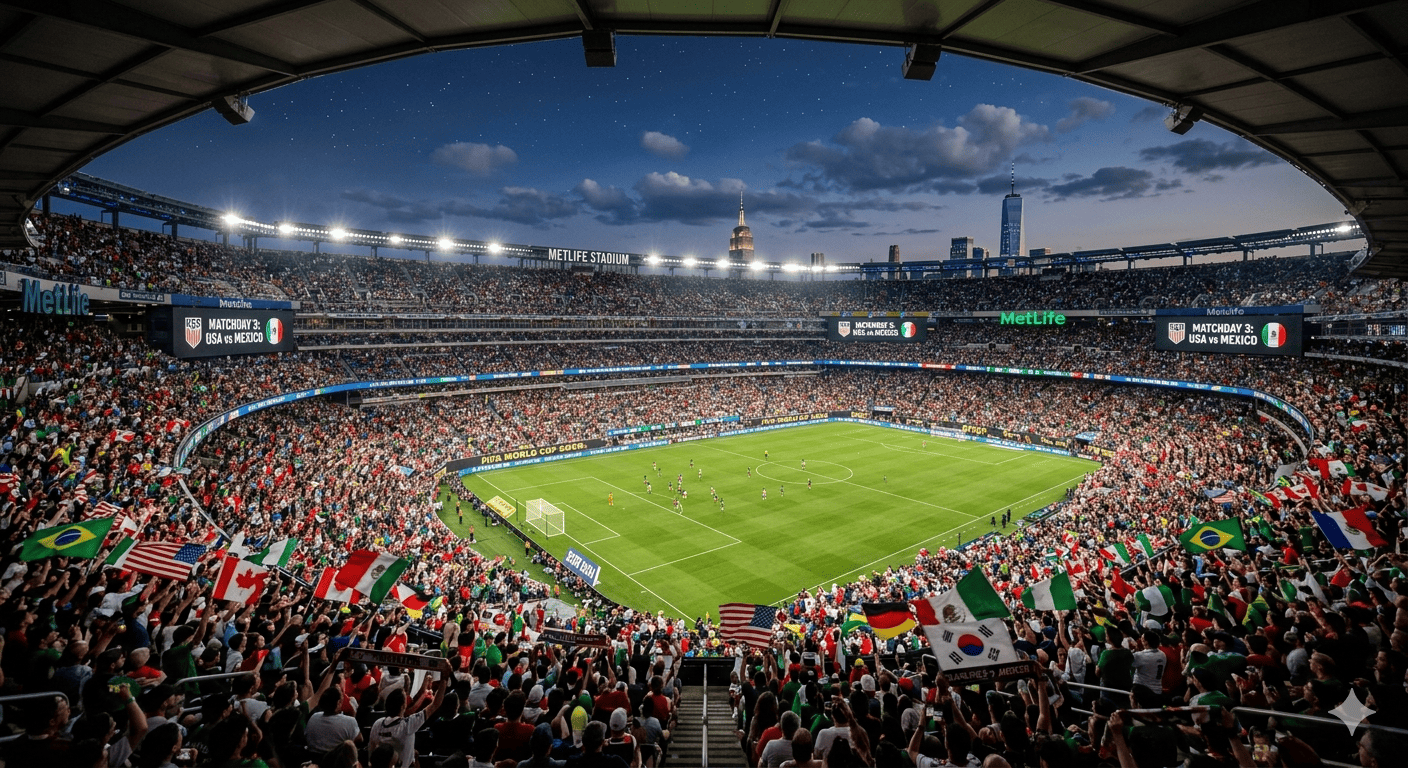
The 2026 FIFA World Cup is transforming into far more than the largest football tournament in history on the pitch—it is officially tracking to become an unprecedented juggernaut for global commerce.
Spanning across three host nations—the United States, Canada, and Mexico—the mega-event is projected to add roughly $41 billion to global GDP. Driven by a massive surge in international travel, hospitality, and localized consumption, this tournament is proving how sports function as a genuine macroeconomic superpower.
The Macro Numbers: Breaking Down the $41 Billion
According to thematic research reports from Bank of America Global Research alongside data from FIFA and the World Trade Organization (WTO), the scale of this tournament will dwarf all previous cycles.
- Global GDP Contribution: A projected $41 billion total impact injected into world economies.
- Job Creation: The tournament is expected to support and create more than 823,000 to 824,000 full-time equivalent jobs globally across sectors like hospitality, logistics, construction, and retail.
- Unrivaled Audience Reach: More than 6.5 million fans are expected to attend matches live in stadiums—nearly doubling the record set at the 1994 World Cup. Meanwhile, a staggering 6 billion people (75% of the world's population) will engage via television and digital media.
- The U.S. Share: The United States is poised to absorb the lion's share of the domestic windfall, capturing an estimated $17.2 billion in direct GDP impact and up to $30.5 billion in total economic output.
Why Tourism is the Heart of the Windfall
While television broadcasting rights ($4.3 billion) and massive sponsorship agreements ($2.7 billion) form the bedrock of FIFA’s internal revenue cycle, tourism and direct fan expenditure are what will actually move the needle for local economies.
According to socioeconomic impact analyses, more than half of all direct, tournament-related spending—54%—will come straight from tourist expenditures.
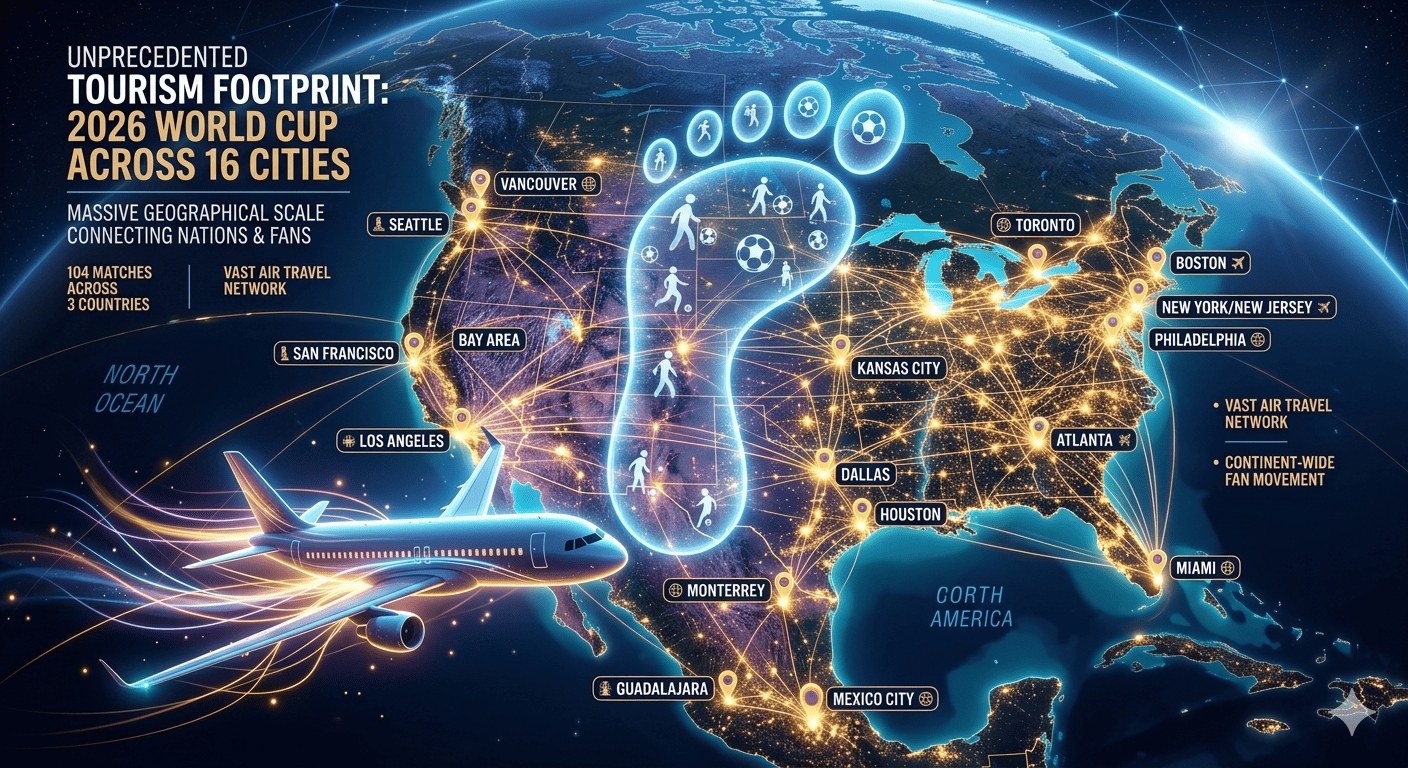
The sheer physical scale of a 48-team, 104-match tournament played across 16 distinct North American cities means fans are traveling further and staying longer than ever before. Analysts note that the cumulative flight distance logged by traveling fans across the continent could equal roughly 66 billion kilometers (41 billion miles)—a distance equivalent to three times the span from Earth to the edge of the solar system, triggering massive tailwinds for the transport sector.
Industry Winners: Who Capitalizes Most?
Market brokerages and analysts have highlighted several consumer-facing sectors perfectly positioned to ride the World Cup wave:
- Hotels and Online Booking Platforms: With an estimated 13.1 million visitors (both ticketed and non-ticketed) traveling across North America, hotel groups like Marriott, Hilton, and Hyatt, alongside platforms like Airbnb, Booking Holdings, and Expedia, are preparing for a historic influx of room bookings.
- Airlines: Despite seasonal fluctuations and current macroeconomic pressures like fuel price volatility, Goldman Sachs believes the tournament represents a major net positive for major North American carriers dealing with an unprecedented wave of cross-continental air travel.
- The Beverage and Food Industries: Analysts project that more than 1 billion pints of beer will be consumed globally during the World Cup month, giving a direct volume lift to the industry. Major brewers like Anheuser-Busch InBev (the official beer sponsor) and Heineken expect a noticeable volume spike. Similarly, major grocery chains (Walmart, Target, Kroger) and fast-casual dining chains stand to benefit from higher consumer volumes.
- Sportswear and Retail: Global brand visibility will heavily benefit athletic giants like Adidas (the official match ball sponsor), Nike, and Puma through replica kit sales and tournament merchandising.
The Host City Gamble: Long-Term Brand Building
While the headline-grabbing $41 billion figure paints an incredibly optimistic picture, independent economists note that the reality for individual host cities requires excellent execution. Local governments and taxpayers in host cities are absorbing hundreds of millions in upfront security, transportation upgrades, and stadium modification costs, while FIFA itself captures the direct commercial revenues from broadcasting and ticketing.
However, financial experts point out that the real value for these hubs is a long-term branding play. By transforming cities into global stages, the tournament functions as a launchpad to permanently boost future tourism, strengthen local infrastructure, and attract international business investments long after the final whistle is blown.