Upgrading the Skies: U.S. Aviation Industry Demands $20 Billion Air Traffic Control Overhaul

The U.S. aviation sector is presenting a united, urgent front to Congress, calling for a massive $20 billion funding injection to complete a sweeping overhaul of the nation's aging air traffic control (ATC) network.
A powerful coalition of more than 50 leading aviation stakeholders—including Airlines for America, Boeing, Airbus, the Air Line Pilots Association, and the U.S. Travel Association—has issued a joint appeal. The coalition, operating as the Modern Skies Coalition, warns that without this critical investment, the National Airspace System (NAS) faces severe operational strain, safety vulnerabilities, and chronic, systemic travel delays.

The $20 Billion Funding Gap: Why Now?
Last year, Congress approved an initial $12.5 billion down payment to replace outdated infrastructure and address severe staffing shortages across the Federal Aviation Administration (FAA). However, industry leaders argue that partial funding is not enough.
According to the Modern Skies Coalition's official letter to Congress, failing to close the funding gap risks "stranded investments, prolonged reliance on obsolete systems, and higher lifecycle costs".
The requested $20 billion is designated for key upgrades, including:
- Next-Gen Software & Compute Power: Transitioning the FAA's isolated compute systems at over 350 individual facilities into a unified, cyber-secure cloud network.
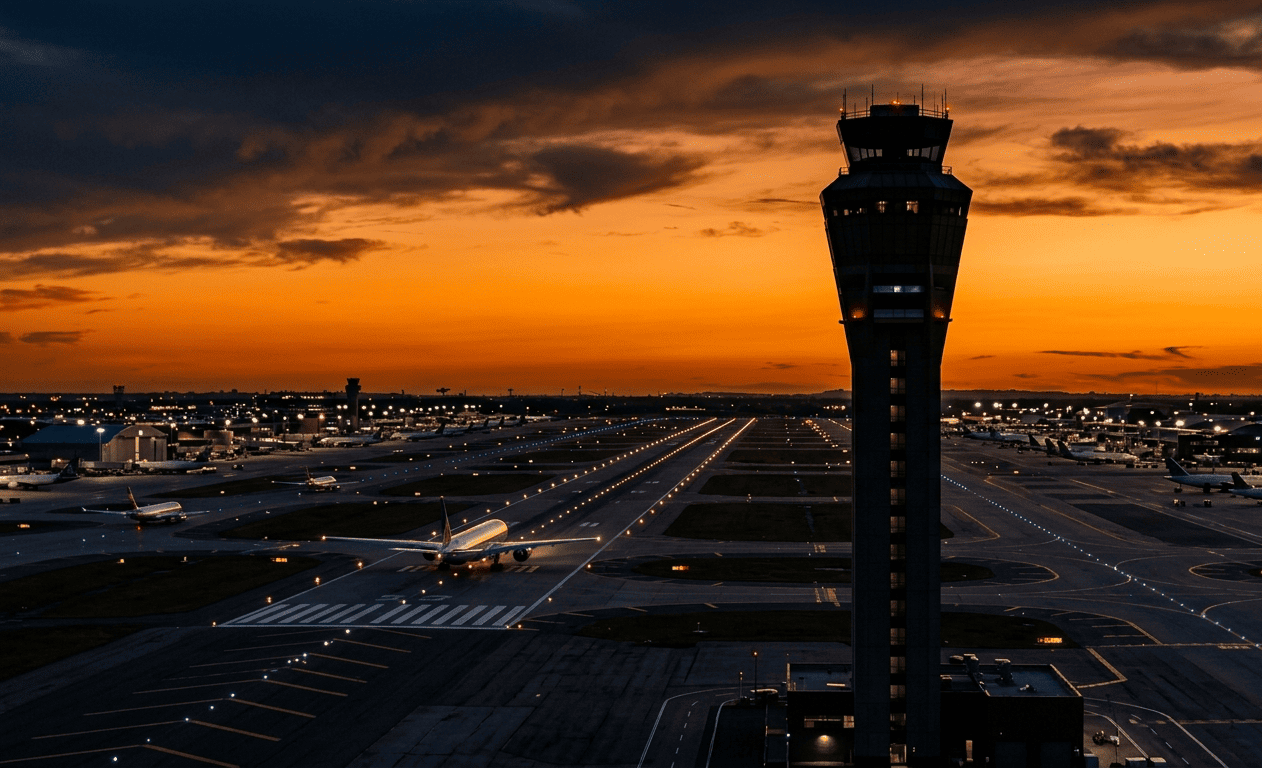
- Infrastructure Replacements: Swapping hundreds of aging, physically deteriorating air traffic control towers and facilities.
- Cutting-Edge Equipment: Upgrading analog radios, legacy voice switches, and copper-wired networks to digital, IP-based fiber, satellite, and wireless connections.
- AI-Driven Airspace Management: Funding advanced traffic software to map flight paths dynamically, which would also reduce local residential noise by limiting the time aircraft spend idling at lower altitudes.
Overcoming "Floppy Disk" Era Vulnerabilities
The push for rapid modernization comes after years of technological embarrassment for the FAA. High-profile system outages and reports highlighting the agency's reliance on archaic floppy disks and legacy hardware have repeatedly made headlines.
The current modernization program, with integrated partners like Peraton managing the cloud migration, is on an accelerated timeline to conclude by the third quarter of 2027—a massive leap forward compared to previous estimates that projected the upgrade would take up to two decades.
What Lies Ahead in Congress?
While Transportation Secretary Sean Duffy initially sought around $19 billion for the Department of Transportation's next phase, the aviation coalition's $20 billion request aims to completely secure the Brand-New Air Traffic Control System (BNATCS).
Support on Capitol Hill is growing. Republican Senator Jerry Moran noted that Congress could allocate additional funds to the modernization initiative in an upcoming spending bill later this year. For travelers, airlines, and controllers alike, the hope is that this $20 billion overhaul will finally ground flight delays and usher American aviation safely into the digital age.