The Drivers Behind Vietnam's Continued Tourism Boom

Southeast Asia’s travel landscape is witnessing a massive reshuffling of power, and Vietnam is leading the charge with unprecedented momentum. According to official data from the General Statistics Office, Vietnam concluded its most successful year on record by welcoming 21.2 million international visitors. Far from slowing down, that trajectory has accelerated sharply; the country recorded a historic 12.2 million international arrivals in the first half of the year alone—marking a 14.8% year-on-year jump.
With an average annual growth rate of 22%, Vietnam’s tourism sector is expanding at over four times the global average. The nation is firmly on track to crush its ambitious target of 25 million international arrivals and $46 billion (VND 1,125 trillion) in revenue. This is no longer just a post-pandemic recovery; it is an entirely new era of dominance in Asian travel.
E-Visas and Connectivity: Lowering the Barriers to Entry
The primary engine behind this historic influx is a highly aggressive, forward-thinking immigration policy. The Vietnamese government's revamped electronic visa (e-visa) scheme has effectively neutralized the friction of holiday planning. By offering seamless online processing, extended stay durations, and multiple-entry options to all countries, Vietnam has transformed itself into a highly attractive destination for spontaneous, long-stay travelers.
Concurrently, commercial aviation has expanded to match this demand. A surge in direct international flight networks—particularly linking major Indian metro areas, expanded secondary routes from China and South Korea, and direct charter connections from Eastern Europe—has funneled millions of high-spending tourists straight into the country's central hubs.
To explore live flight connectivity, entry requirements, and peak seasonal timetables, travelers can reference the official Vietnam National Authority of Tourism (VNAT) portal for real-time travel updates.
The Strategic Pivot: Personalisation and "Deep Travel"
While iconic destinations like Ha Long Bay, Da Nang, and Ho Chi Minh City continue to draw massive crowds, the true catalyst of the current boom is a profound shift in traveler behavior toward high-value, experiential itineraries. Today's international tourists are systematically trading generic package tours for highly curated, localized experiences.
Three niche travel sectors are experiencing exponential growth:
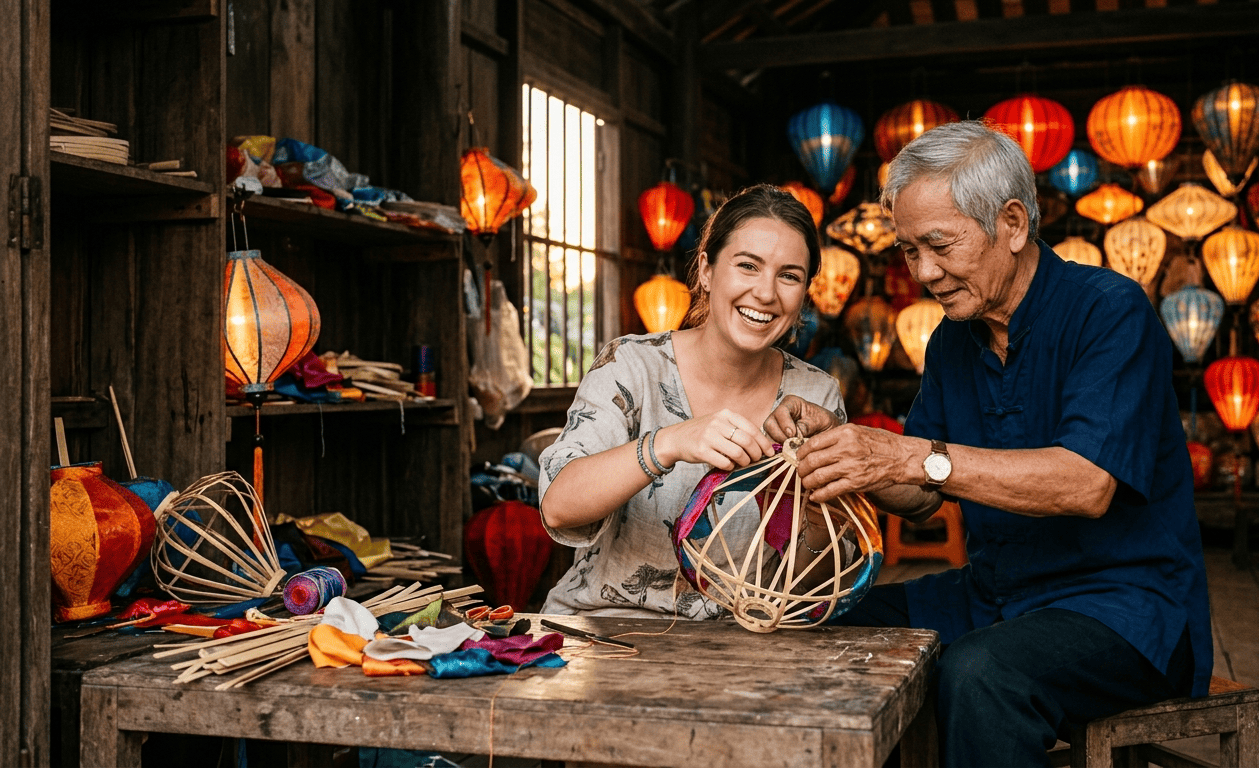
- Cultural Immersive Tourism: Travelers are opting to spend days in historical pockets like Hội An or the Bat Trang pottery villages near Hanoi, participating in traditional cooking workshops, ancestral weaving classes, and community-centric homestays.
- Eco-Preservation Holidays: Pristine, green-focused enclaves such as Ninh Bình, Hà Giang, and Phú Quốc are drawing eco-conscious adventurers who prioritize zero-plastic luxury resorts and low-impact rural trekking.
- Premium Wellness Retreats: Capitalizing on its lush, mountainous landscapes and tranquil shorelines, destinations like Quy Nhơn and Đà Lạt have evolved into global health hubs, specializing in multi-day mindfulness, yoga, and detox therapies.
This conscious shift from mass overtourism to experience-driven travel ensures that tourism revenues flow directly back into regional communities, creating a sustainable economic loop.