
The Blueprint for Cheap Flights: How the Philippines' Airport Expansion Plan Aims to Slash Airfares
For years, travelers flying across the Philippine archipelago have grappled with volatile ticket prices. While budget-carrier seat sales offer temporary relief, the structural cost of domestic air travel has remained high due to localized logistical bottlenecks.
To systematically lower travel costs and boost tourism, the Civil Aviation Authority of the Philippines (CAAP) and the Department of Transportation (DOTr) have shifted their strategy. Rather than just adjusting fuel surcharges, the government is executing a sweeping infrastructure initiative focused on runway extensions and night-rating upgrades to radically improve airline operating efficiency.
By expanding physical airport capacities, aviation regulators aim to foster intense market competition and drive down baseline airfares for millions of Filipino commuters and international tourists.
The 2,100-Meter Directive: Scaling Up to Jet Operations
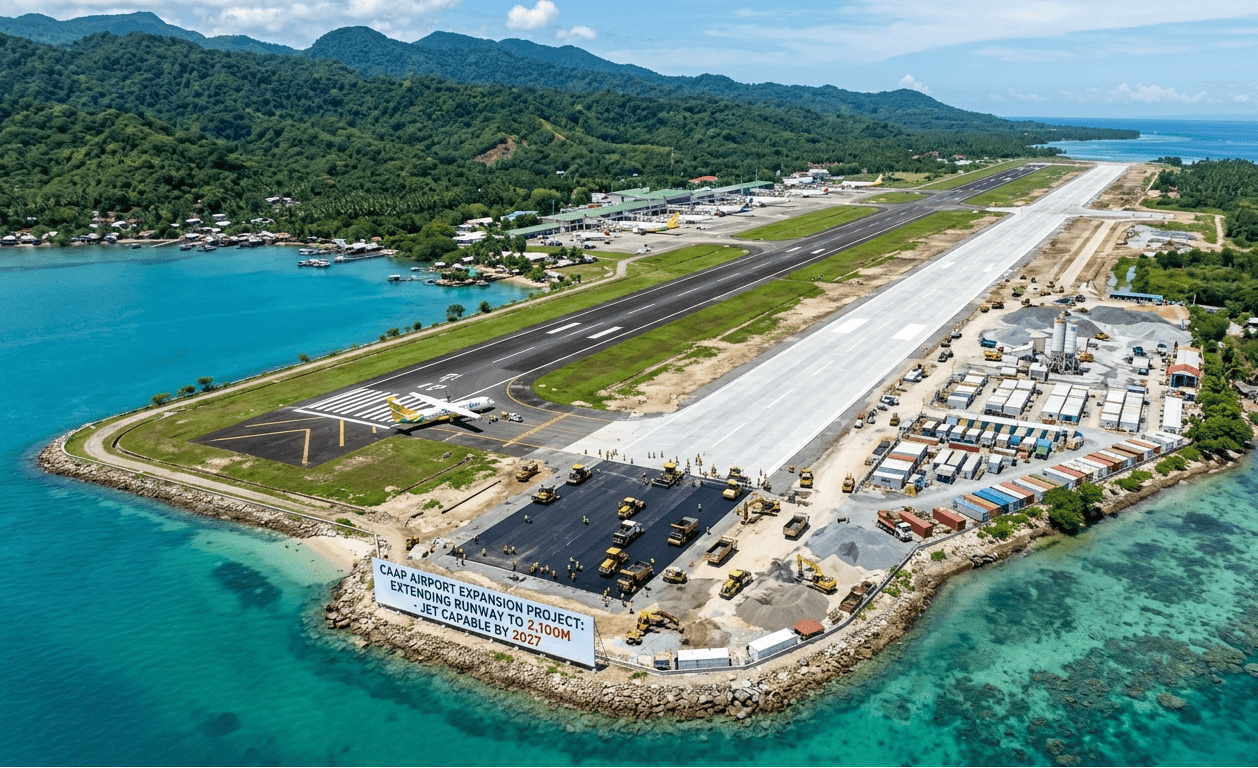
The centerpiece of the government's cost-reduction strategy is a mandate issued by Acting Transportation Secretary Giovanni Lopez, requiring existing and future commercial runways to expand to a minimum length of 2,100 meters, except where limited by severe terrain constraints.
Currently, many regional hubs outside of Manila feature short runways measuring only 1,000 to 1,500 meters. These constraints limit regional operations to smaller turboprop aircraft, which severely restricts passenger capacity.
By lengthening runways to 2,100 meters, airports can transition from turboprops to standard commercial jets. When airlines can fly 180 to 465 passengers on a single flight instead of 72, their unit cost per passenger plummets. These operational savings can then be passed directly to the consumer in the form of lower ticket prices.
According to CAAP, 28 out of the country's 48 commercially operated airports already meet this 2,100-meter threshold, with ongoing development pipelines actively targeting the remaining regional hubs.
Upgrading Night-Ratings to Maximize Fleet Utilization
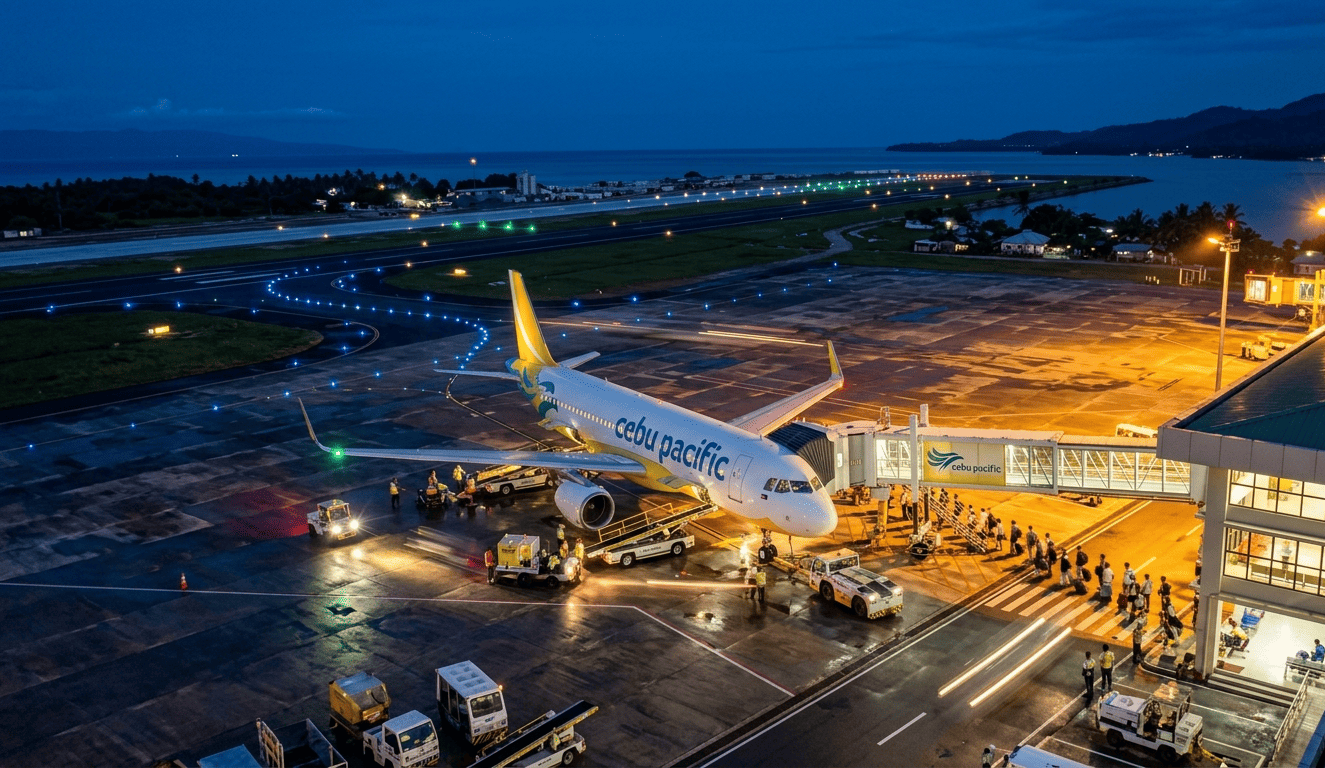
Extending concrete is only half the battle; the government is also tackling scheduling bottlenecks. Historically, many provincial airports in the Philippines have been forced to operate strictly under Visual Flight Rules (VFR), meaning they must shut down commercial operations at sunset.
To eliminate this bottleneck, CAAP is aggressively advancing night-rating capabilities across the country. Installing advanced airfield lighting systems and instrument landing systems unlocks several critical economic benefits:
- 24/7 Operations: Airports can safely handle flights during late-night and early-morning hours.
- Increased Flight Frequencies: Spreading flights across a 24-hour cycle reduces congestion at major transit hubs like Manila's Ninoy Aquino International Airport (NAIA).
- Better Aircraft Utilization: Airlines can keep their expensive jet fleets flying longer hours rather than leaving them parked overnight, heavily optimizing operational overhead.
Currently, 23 Philippine airports are fully night-capable. Regulators are prioritizing immediate upgrades for Cauayan and Tuguegarao airports, with high-traffic tourism gateways like Busuanga, Siargao, Dipolog, Pagadian, and Antique scheduled next in the pipeline.
Privatization and Fleet Realignment: The Industry Responds
The push for upgraded regional infrastructure aligns with a broader structural shakeup across the country's aviation matrix. Under the “Build Better More” infrastructure program, the government is moving forward with public-private partnerships (PPPs) to privatize key regional assets—including Iloilo, Puerto Princesa, Davao, Siargao, and Bohol-Panglao international airports.
Major carriers are already shifting their networks to match this upgraded landscape. For example,Philippine Airlines (PAL) Flight Schedules underwent a massive realignment, discontinuing its domestic turboprop flights out of Manila to shift aggressively toward expanded jet services.
Simultaneously, to protect travelers from localized economic headwinds and sudden spikes in global oil markets, the Civil Aeronautics Board (CAB) Consumer Portal has shortened its fuel surcharge review cycle to a 15-day window. This allows the government to immediately drop travel costs for consumers the moment global fuel prices stabilize.
Net Effect: Democratizing Philippine Skies
By pairing private-sector efficiency with aggressive runway expansions, the Philippines is moving away from luxury-tier pricing for domestic travel. As more regional runways clear the 2,100-meter mark and unlock round-the-clock capabilities, the aviation sector is positioned to offer highly competitive, sustainable, and genuinely affordable airfares across the country.