
Thailand Welcomes 16.3 Million International Tourists in First Half of 2026

Thailand’s tourism sector has recorded a robust performance for the first half of 2026, welcoming approximately 16.3 million international visitors between January and June. According to official data released by the Ministry of Tourism and Sports, this represents a notable 14.8% increase compared to the same period last year, solidifying the Kingdom’s standing as one of Asia’s premier travel hubs.
The impressive growth highlights the resilience of Thailand’s travel market amid shifting global economic dynamics and intensifying regional competition.
Key Drivers Behind the Surge
The Ministry of Tourism and Sports attributed the first-half surge to several critical factors:
- Expanded Aviation Networks: Wider international flight paths and increased flight capacities made traveling to the country much more accessible.
- Targeted Visa Easing: Streamlined entry requirements and visa exemptions for massive source markets—specifically China, India, and Russia—significantly lowered the barrier to entry.
- Market Diversification: Active promotional campaigns successfully drew visitors from both short-haul regional hubs and high-spending long-haul markets.
Top Tourist Source Markets in H1 2026
Asian nations continue to dominate the influx of arrivals, though Western markets remain vital for high-value economic contributions.
China holds the top spot as the largest source market with 2.53 million arrivals, heavily bolstered by the expansion of visa-free access. Malaysia follows closely behind with 1.99 million visitors, driving robust short-haul land and air travel across the border.
India represents a fast-emerging demographic with 1.18 million arrivals, showing exceptionally high demand for weddings, events, and leisure travel. Meanwhile, Russia contributed 996,000 visitors, showing a strong preference for extended stays in coastal and island resorts. Rounding out the top tier, South Korea brought in 576,000 travelers, fueled by a rising interest in luxury wellness travel and corporate groups.
While arrivals from Europe and North America trailed behind Asia in sheer volume, countries like Germany, the United Kingdom, and the United States stood out for their extended lengths of stay and higher average daily spending, yielding significant tourism revenue.
Destinations: Beyond the "Big Three"
Unsurprisingly, tourist demand remained heavily concentrated in Thailand's flagship destinations:
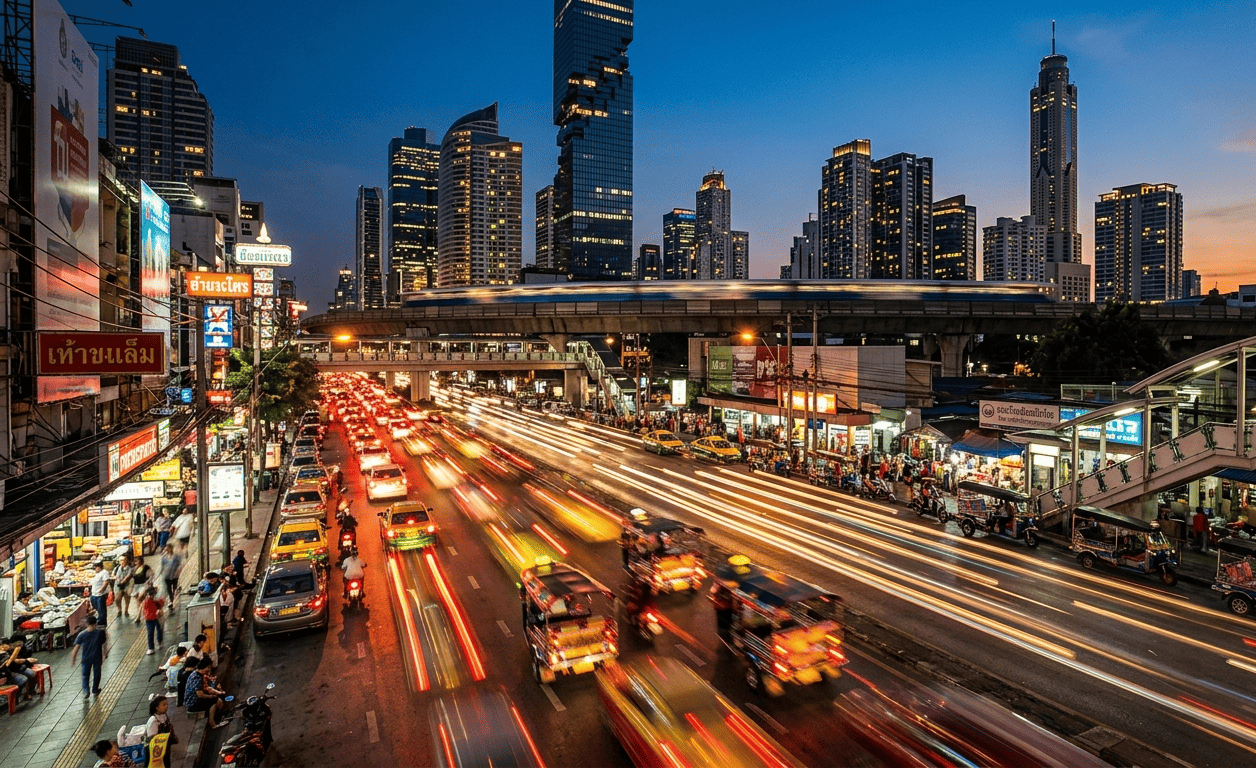
- Bangkok: Drew massive crowds for cosmopolitan shopping, business travel, and world-class medical tourism.
- Phuket & Krabi: Retained a strong grip on the global luxury holiday market and nature-focused eco-tourism.
- Pattaya: Maintained its reputation as a premier entertainment and nightlife hub.
However, travel data from booking platforms likeAgodaindicates a growing trend of travelers venturing off the beaten path. Secondary destinations like Chiang Mai, Khao Yai, and Kanchanaburi saw an uptick in accommodation searches, pointing toward a rising global appetite for inland, nature-centric, and community-based travel.
Quantity vs. Quality: TAT’s Evolving Strategy
Despite the strong first-half showing, the Tourism Authority of Thailand (TAT) is pivoting away from chasing purely volume-driven benchmarks. With regional competition heating up from nations like Japan and Vietnam, Thai tourism authorities are focusing heavily on high-value tourism.
Rather than aiming for the nearly 40 million arrivals seen in peak pre-pandemic years, the full-year target for 2026 is projected closer to 33 million international visitors. The priority for the remainder of the year is clear: attract higher-spending tourists, encourage longer stays, and promote travel to local communities to distribute wealth more evenly across the nation.
To track this and book your next journey seamlessly, check out the officia lTourism Authority of Thailand hub.