
STRANDED BY THE STRIKE: The Step-by-Step Passenger Survival Guide for the Kuwait Airport Shutdown
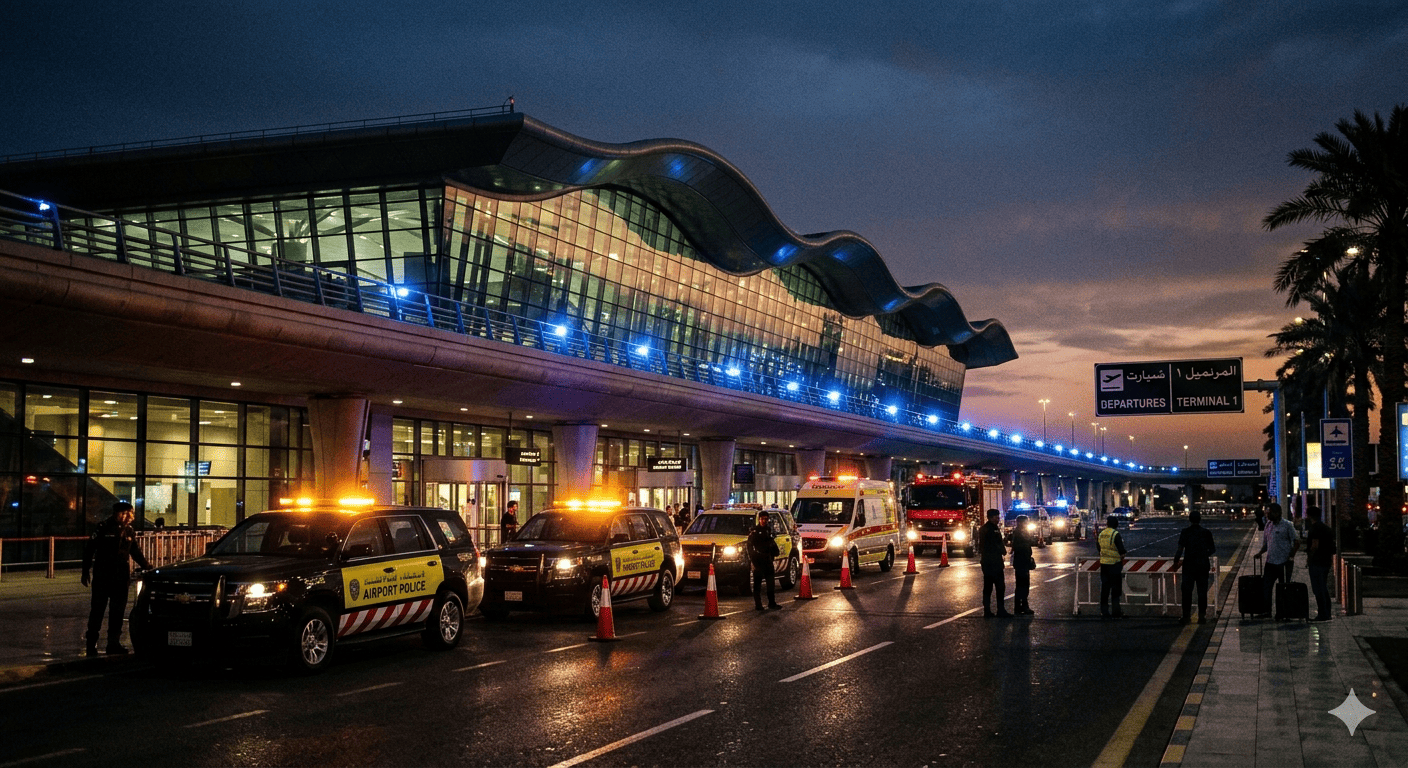
The sudden and violent disruption at Kuwait International Airport (KWI) today, June 3, 2026, has left tens of thousands of international travelers facing an unprecedented logistical crisis. Following a severe drone and missile strike that caused heavy structural damage to Terminal 1, the Directorate General of Civil Aviation enacted a complete ground stop on commercial traffic.
While regional airspace filters handle incoming diversions, passengers on the ground are dealing with a chaotic reality: a shuttered terminal, canceled flight boards, and completely overwhelmed customer service hotlines.
If your travel plans have been derailed by today's strike, panic is not a strategy—execution is. This step-by-step survival guide details the precise actions you must take right now to secure your safety, protect your financial investment, and find a way out of the bottleneck.
Step 1: Secure an Official "Flight Disruption Certificate"
Do not leave the vicinity or close your airline mobile app without securing formal documentation. Because this flight suspension is classified as an extraordinary geopolitical event rather than a standard mechanical delay, your path to financial recovery relies entirely on paperwork.
- Why it matters: Independent travel insurance providers, corporate expense accounts, and premium credit card protection benefits will not pay out premium flight interception claims based on news headlines alone. They require a carrier-issued Flight Disruption Certificate (sometimes called a Force Majeure Letter).
- What to do: If the physical service desks are inaccessible due to terminal lockdowns, log into your carrier’s digital portal immediately. Request an automated PDF statement of cancellation citing the airspace security closure.
Step 2: Bypass Phone Lines—Use the Digital "Backdoor"
Attempting to call local customer service numbers during a regional aviation crisis will result in hours of dropped calls and hold music. Instead, target the less congested digital infrastructure channels.
The Multi-Channel Approach:
- Change Your Region: If you are flying on an international carrier (such as IndiGo or a Western airline), use a VPN or change your app location settings to a market currently asleep (e.g., North America or East Asia). Their regional phone centers will have significantly shorter queues.
- Deploy Social and Messaging API Tools: Airlines prioritize public-facing channels and direct messaging APIs. Use official WhatsApp business accounts, verified X (formerly Twitter) direct messages, or specialized live chat functions embedded in the carrier’s mobile application to initiate a claim.
Step 3: Pivot to the Overland "Saudi Land-Bridge" Strategy
For passengers whose final destination is within the GCC or those desperate to catch critical international connections out of the region, sitting in a Kuwaiti hotel room waiting for Terminal 1 to rebuild is a losing proposition. You must consider an overland exit.
During previous regional aviation standstills, the highway corridor connecting Kuwait City to Saudi Arabia’s Eastern Province served as an essential safety valve.
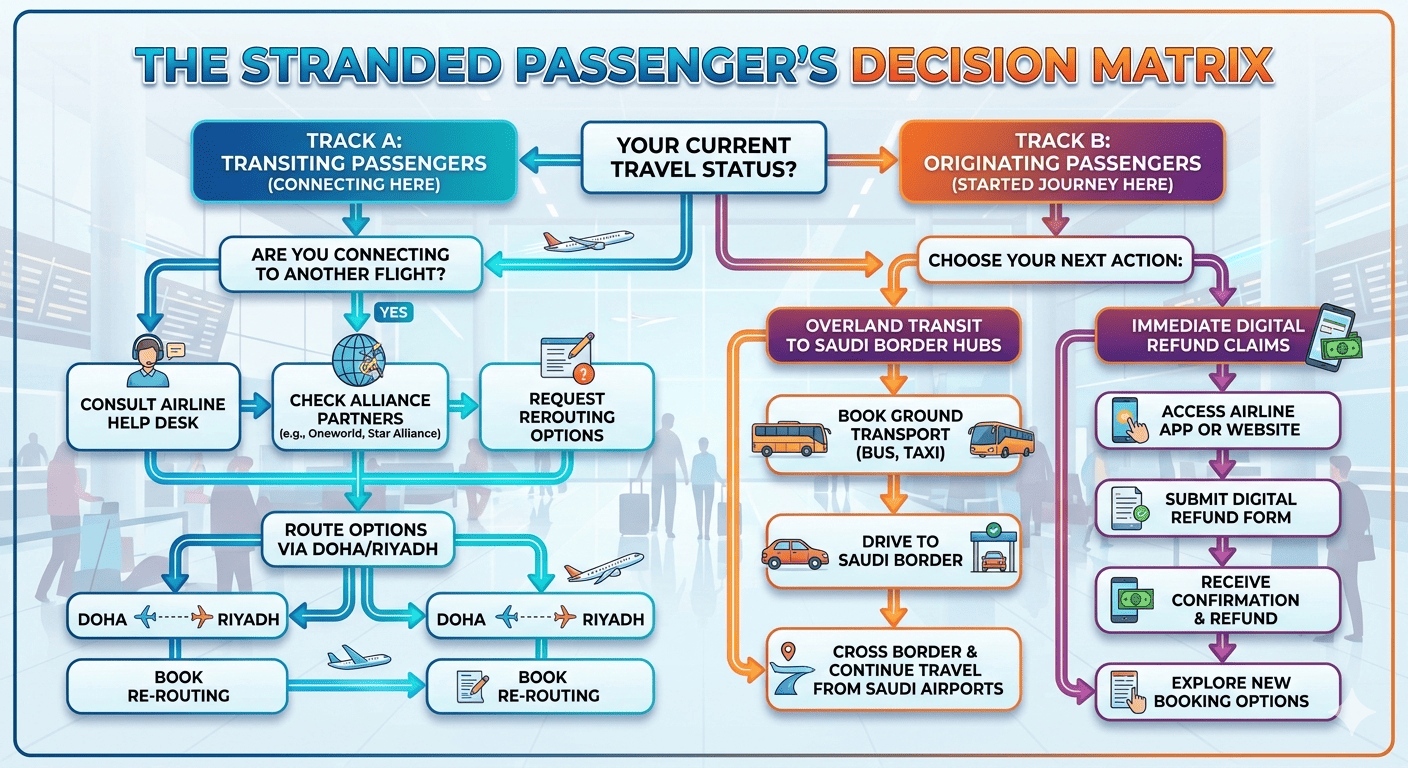
- The Route: Secure a reputable private car service or cross-border transport to take you south via Route 40 to the Nuwaiseeb border crossing into Saudi Arabia.
- The Destination: From the border, continue on to King Fahd International Airport (DMM) in Dammam. Dammam is a massive regional hub operating completely outside the restricted northern Gulf airspace corridor, offering daily direct long-haul flights to Europe, Asia, and North America. Ensure your passport is eligible for an instant Saudi e-Visa before making the border run.
Step 4: Audit Alliance Interlining Options
If you are an international transit passenger stranded mid-journey at a connection hub outside of Kuwait, do not limit your rebooking demands to your original airline.
Under international aviation interline agreements, if a carrier cancels a flight due to an airport closure, they have the capability—and often the obligation—to endorse your ticket over to a competing alliance partner if an alternate route is available. Demand that the agent look for options that bypass Kuwait entirely, routing you instead through massive, unaffected operational centers like Doha (QR), Riyadh (SV), or Dubai (EK).
Step 5: Know Your Refund Rights vs. Force Majeure
Be aware of the legal distinctions regarding compensation during today's crisis. Because this strike falls under the category of force majeure (acts of God/war), airlines are legally absolved from paying out mandatory carrier-paid hotel accommodations, prepaid meals, or missed independent tour connections.
However, you retain a strict right to a 100% cash refund of the untraveled segments of your ticket, or a penalty-free date alteration if you choose to wait out the closure. For all emergency lodging, food, and ground transport expenses incurred during the delay, you will need to submit your Flight Disruption Certificate (secured in Step 1) directly to your independent travel insurance provider to activate your out-of-pocket policy coverage.