Regional Connectivity Crisis: Eastern Airways Administration Sparks Fresh Challenges for UK Air Travel
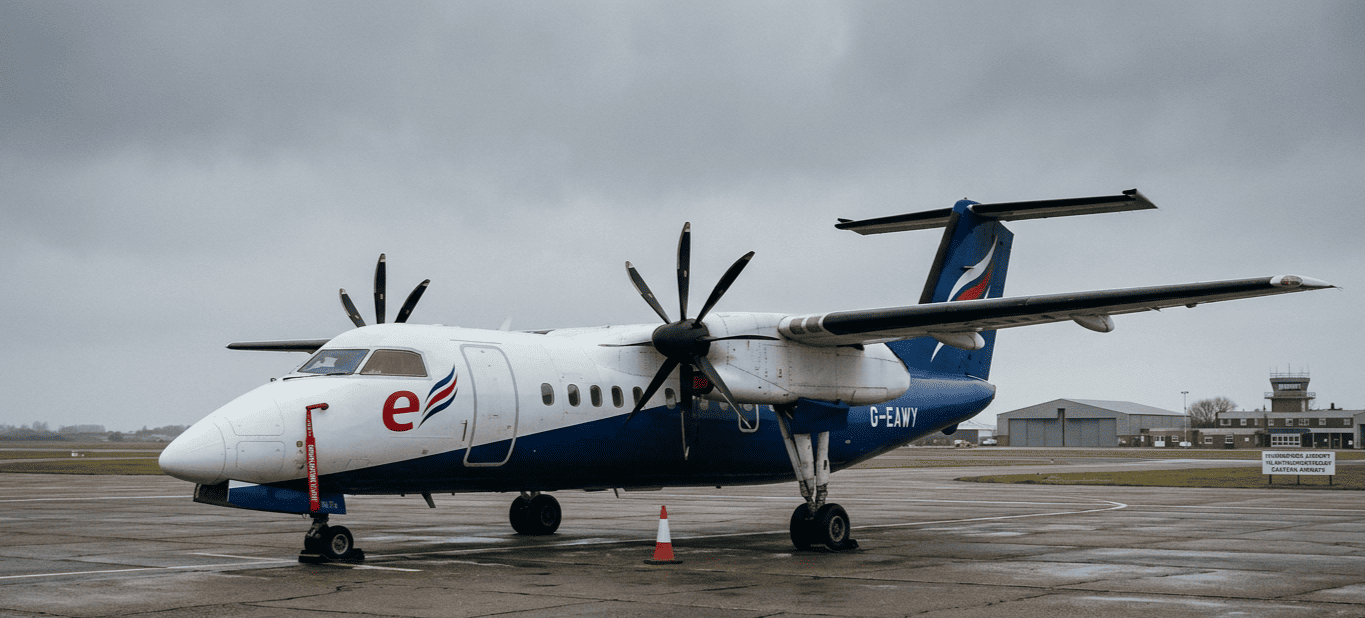
The UK regional aviation sector has been dealt a final, definitive blow. Following a sudden operational suspension, the news has officially broken that Eastern Airways is entering full liquidation after a last-ditch rescue bid by administrators fell through.
The Humberside-headquartered carrier, which operated domestic, international, and private charter flights for nearly three decades, filed a notice of intention to appoint administrators following the abrupt termination of a vital capacity contract with Dutch partner KLM. Now, with administrators from RSM UK moving forward to break up the company and sell off its remaining aircraft fleet, the final chapter of the airline has officially closed.
This sudden exit strips several vulnerable UK regions of essential economic links and shines a harsh spotlight on the systemic fragility currently plaguing regional air travel.
The Catalyst: How a Lost Contract Grounded an Aviation Stalwart
For 29 years, Eastern Airways served as a key regional lifeline, facilitating up to 200 flights a day at its operational peak. However, the business model increasingly leaned on an ACMI (Aircraft, Crew, Maintenance, and Insurance) agreement to operate Embraer E190 aircraft on behalf of KLM Cityhopper from several regional UK bases.
The unexpected termination of this partnership severely depleted the airline's predictable revenue. Combined with soaring fixed overheads and an increasingly unsustainable staff base, the directors were left with no choice but to ground operations.
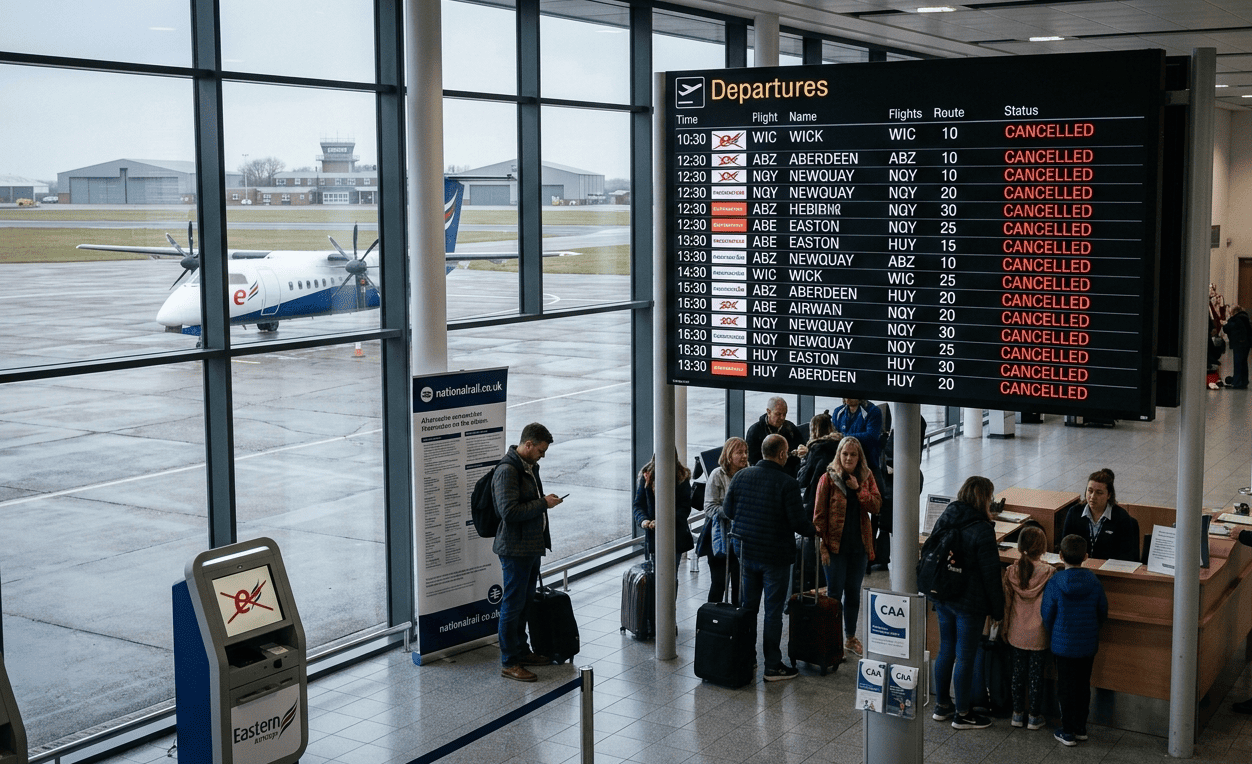
Lost Lifelines: The Public Service Obligation (PSO) Deficit
The most immediate casualty of the Eastern Airways administration is the disruption of critical Public Service Obligation (PSO) routes. These government-subsidized "lifeline" services are designed to connect isolated regional communities to primary economic centers.
The liquidation has instantly severed two major domestic lifelines:
- The Aberdeen to Wick John O'Groats Route: A critical link designed to revitalize economic investment in the remote Scottish Highlands.
- The London Gatwick to Newquay Route: A major tourism and corporate corridor that previously supported over 85,000 annual passengers traveling between Cornwall and the capital.
While replacement operators like Isles of Scilly Skybus have stepped in to cover specific corridors like the Newquay-Gatwick route, other regional routes face prolonged connectivity gaps. Fellow regional operator Loganair may absorb isolated fragments of the northern route network, but utilizing larger regional aircraft could prove financially unviable on lower-density routes.
Redundancies and Broken Infrastructure
Beyond the disruption to travelers, the collapse leaves a painful human footprint. Over 290 pilots, flight crew, and administrative personnel have been made redundant.
Furthermore, Eastern’s departure signals the end of the line for the iconic BAe Jetstream 41 turboprop within active UK commercial passenger service. The fleet of seven Jetstreams and remaining Embraer aircraft are being completely liquidated and sold off to third-party buyers, permanently altering the structural landscape of the UK's regional charter capability.
Booking Protections: Passenger Rights Post-Collapse
Because Eastern Airways operated stand-alone scheduled flights rather than package holidays, its bookings were not covered by ATOL protection. The UK Civil Aviation Authority (CAA) has strongly advised travelers not to travel to airports for Eastern-operated legs.
To review up-to-date regional transit guidance or discover alternative transport arrangements across the UK mainland, passengers are encouraged to monitor updates via the UK Civil Aviation Authority (CAA) or plan alternative land travel through the National Rail Enquiries Network.