North Africa’s King of Tourism: Morocco Smashes Entry Records in 2026
The North African Kingdom of Morocco is cementing its position as an undisputed global tourism powerhouse. Following a historic, record-shattering year in 2025 where international arrivals reached an unprecedented 19.8 million visitors, Morocco’s tourism sector has carried immense momentum straight into 2026.
According to the latest data from the Moroccan Ministry of Tourism, Handicrafts, and Social and Solidarity Economy, the Kingdom welcomed over 7.7 million tourists in the first five months of 2026 alone—marking a stellar 7% increase compared to the exact same period last year. May 2026 alone saw an exceptional dynamic, bringing in 1.7 million visitors, a 13% year-on-year spike that highlights the country’s booming year-round appeal.
With these numbers, Morocco has successfully outperformed regional travel giants like Egypt and South Africa, climbing the ranks to become the 22nd most visited destination globally.
What is Fueling the Moroccan Tourism Surge?
Morocco's meteoric rise on the international travel stage is far from an overnight coincidence. It is the direct result of a calculated, multi-year Strategic Tourism Roadmap (2023-2026) backed by heavy infrastructure investments and aggressive global marketing.
Key pillars propelling the current boom include:
- Unrivaled Aviation & Air Connectivity: Massive expansion of direct flight routes connecting major European, Middle Eastern, and North American hubs directly to Moroccan cities. Low-cost carriers and national airlines have significantly reduced travel costs and barriers.
- The Digital Nomad & Influencer Effect: High social media visibility via travel content creators has showcased Morocco's modern infrastructure, luxury riads, and diverse landscapes to a younger, tech-savvy global demographic.
- Perception of Safety and Stability: At a time of fluctuating regional dynamics, Morocco has steadfastly consolidated its global image as a highly secure, safe, and welcoming destination.
- Diverse Inbound Markets: While France (29%), Spain (23%), and the United Kingdom (7%) remain the largest source markets, emerging markets are surging. Arrivals from China, for instance, climbed by a staggering 40%.
Flagship Hotspots and Emerging Trends
While traditional cultural hubs continue to draw the highest density of overnight stays, travelers are increasingly diversifying how and where they experience the country.
The Cultural & Imperial Staples
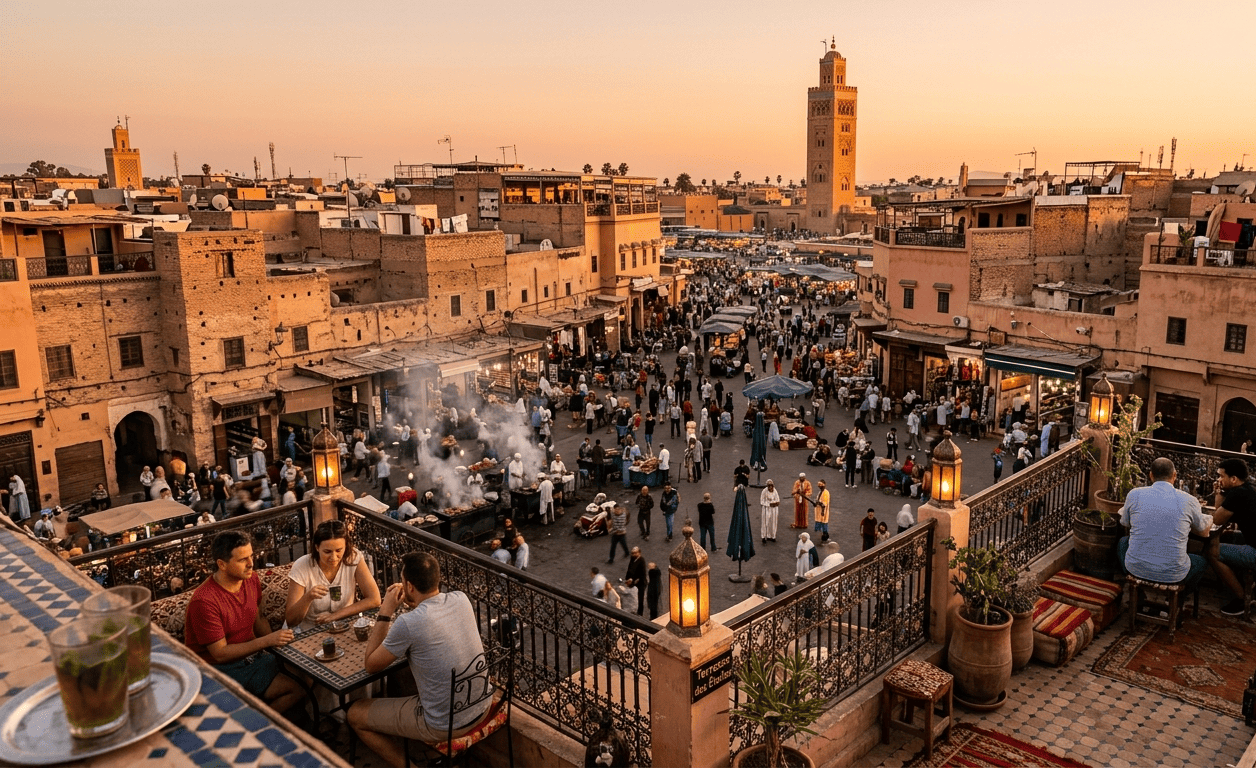
Cities like Marrakech and Fes remain the bedrock of cultural exploration. Visitors flock to these hubs to experience centuries-old medinas, intricate architecture, artisan workshops, and luxury boutique riads.
Sun, Surf, and Coastal Luxury
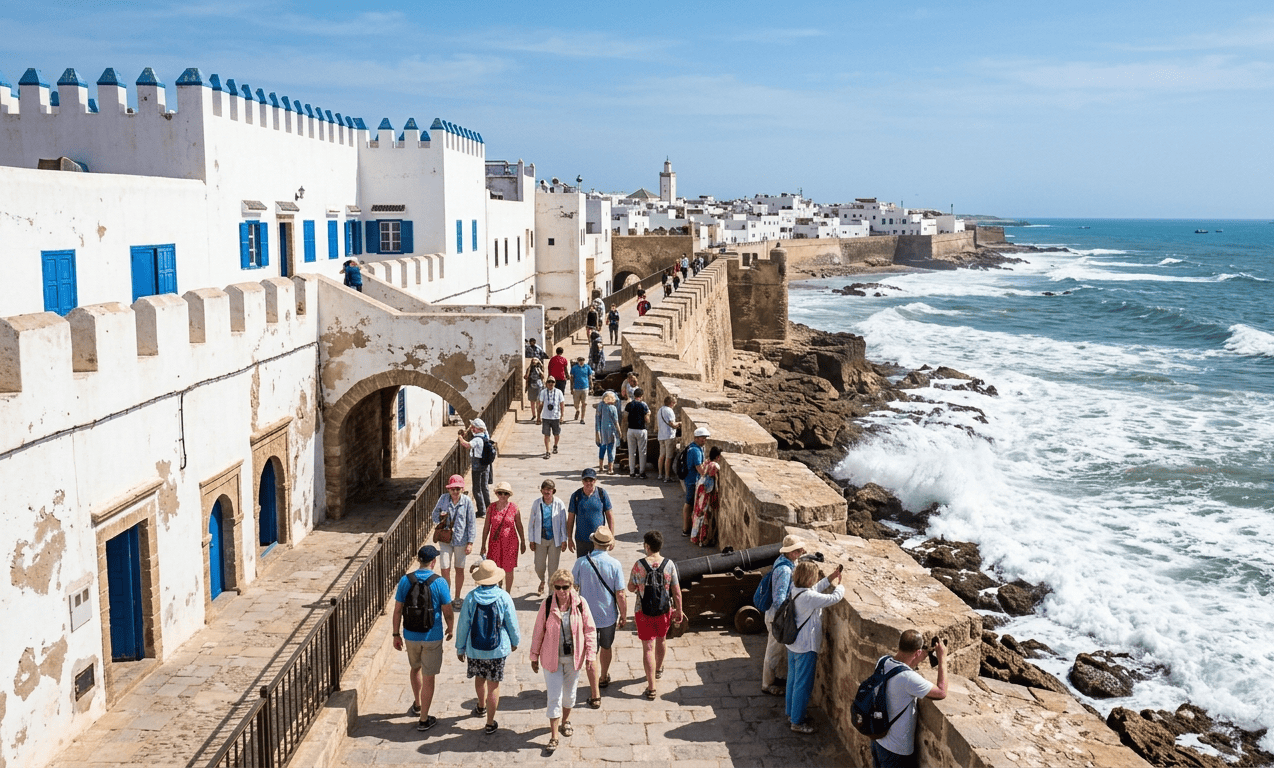
Coastal hubs like Agadir and Essaouira are witnessing tremendous growth. Agadir’s Souss-Massa region recorded over 8.8 million overnight stays, drawing travelers looking for world-class surfing, beachside wellness retreats, and premium Atlantic hospitality.
Adventure Tourism in the Sahara
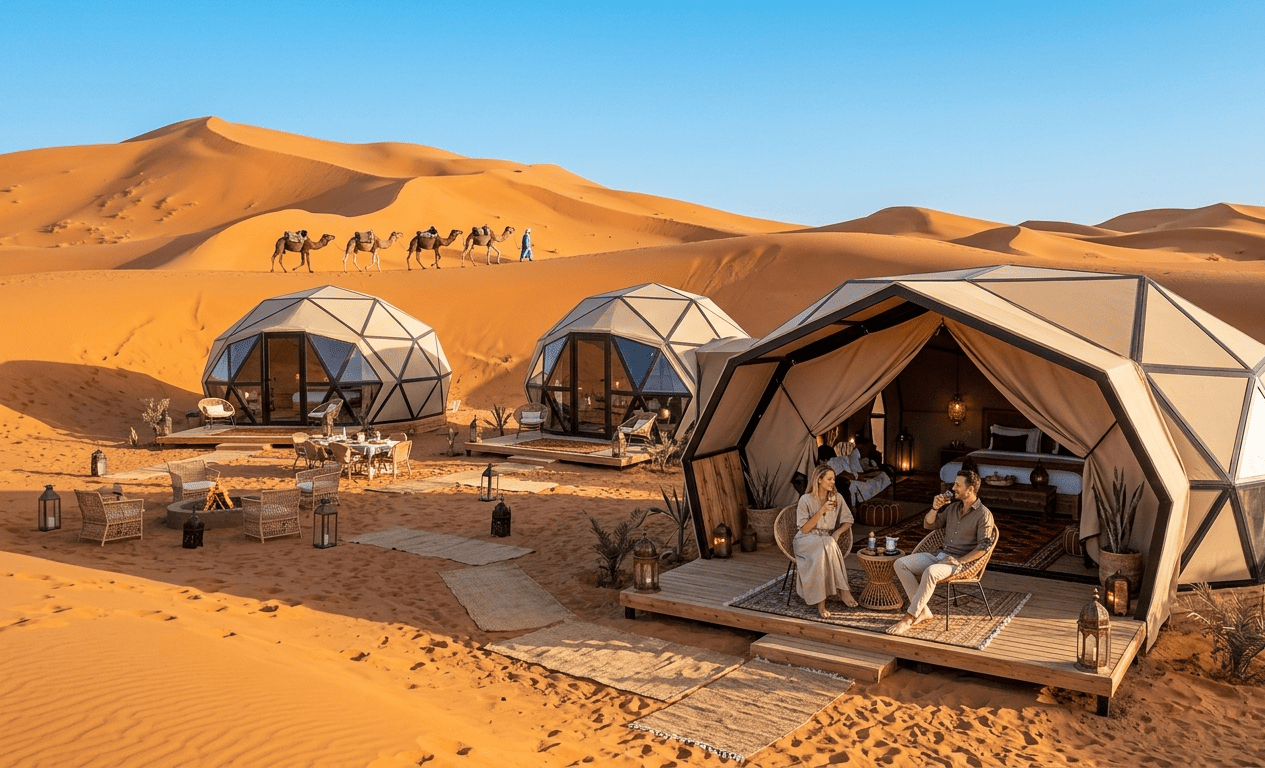
The Drâa-Tafilalet region, which serves as the primary gateway to the iconic Sahara Desert, recorded one of the country's highest growth rates at 23%. Luxury desert glamping, camel trekking, and off-road eco-expeditions are fast becoming bucket-list staples for high-value international travelers.
Looking Forward: The Path to 2030
Morocco has no intention of slowing down. The current 2026 tourism roadmap has successfully integrated domestic travel expansions alongside international market growth.
The bigger prize, however, lies at the end of the decade. As Morocco prepares to co-host the highly anticipated 2030 FIFA World Cup alongside Spain and Portugal, the government has set an ambitious target of welcoming 26 million annual visitors by 2030. Upgrades to high-speed rail networks, airport expansions, and hotel hospitality training are already underway to ensure the Kingdom is fully prepared for its global close-up.
To learn more about local regions or to plan your next itinerary, explore the officialVisit Moroccoportal or check travel requirements on theMoroccan National Tourism Officesite.