International Demand for U.S. Travel Rebounds to Record Highs
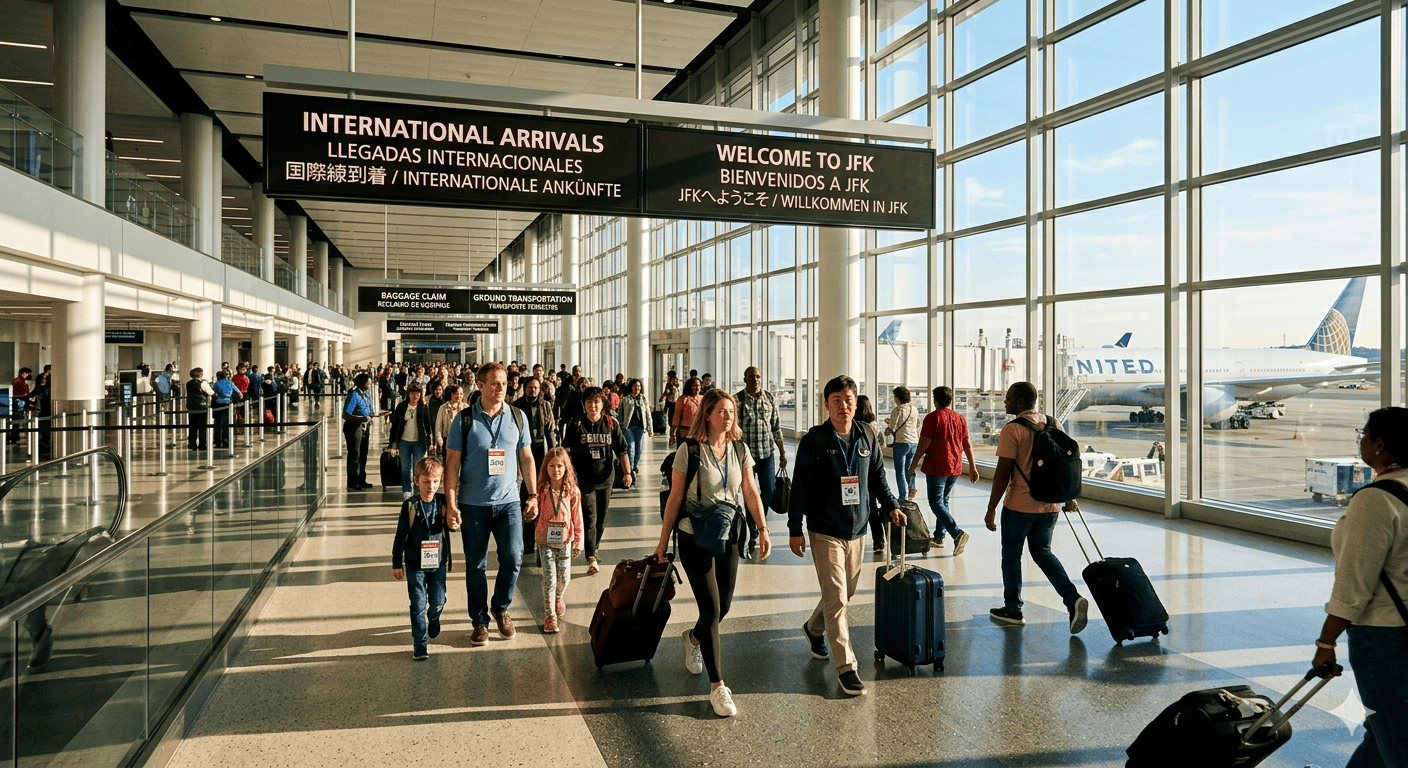
The global appetite for American tourism has officially roared back to life. Following years of uneven recovery, fluctuating currency valuations, and persistent bureaucratic bottlenecks, international inbound travel to the United States is experiencing a massive, synchronized resurgence. From the bustling avenues of New York City to the natural expanses of the American West, global travelers are returning in numbers not seen in nearly a decade, signaling a major economic windfall for the domestic hospitality, aviation, and retail sectors.
Data from the National Travel and Tourism Office (NTTO) highlights a significant acceleration in visitor arrivals from core overseas markets. This rebound is not merely a localized spike; it represents a systemic leveling-up of international consumer confidence and a renewed desire to explore iconic American destinations.
The Catalyst Drivers: Streamlined Visas and High-Value Experiences
For months, the primary headwind capping the U.S. travel recovery was not a lack of interest, but a backlog of paperwork. Extreme wait times for first-time visitor visa interviews in key growth markets acted as a structural brake on growth.
A concerted, tech-driven push by the U.S. Department of State to optimize consular operations has dramatically cut wait times in vital hubs. With interview backlogs easing significantly, a massive wave of pent-up demand has been unlocked.
Concurrently, a stabilizing macroeconomic environment has altered the math for global vacationers. While a historically strong U.S. dollar previously squeezed international budgets, recent currency adjustments have made transatlantic and transpacific journeys highly competitive once more. International travelers, notoriously characterized as higher spenders who stay longer than domestic tourists, are actively booking premium itineraries, luxury lodging, and extensive multi-city domestic flights.

Leading the Charge: Key Global Source Markets
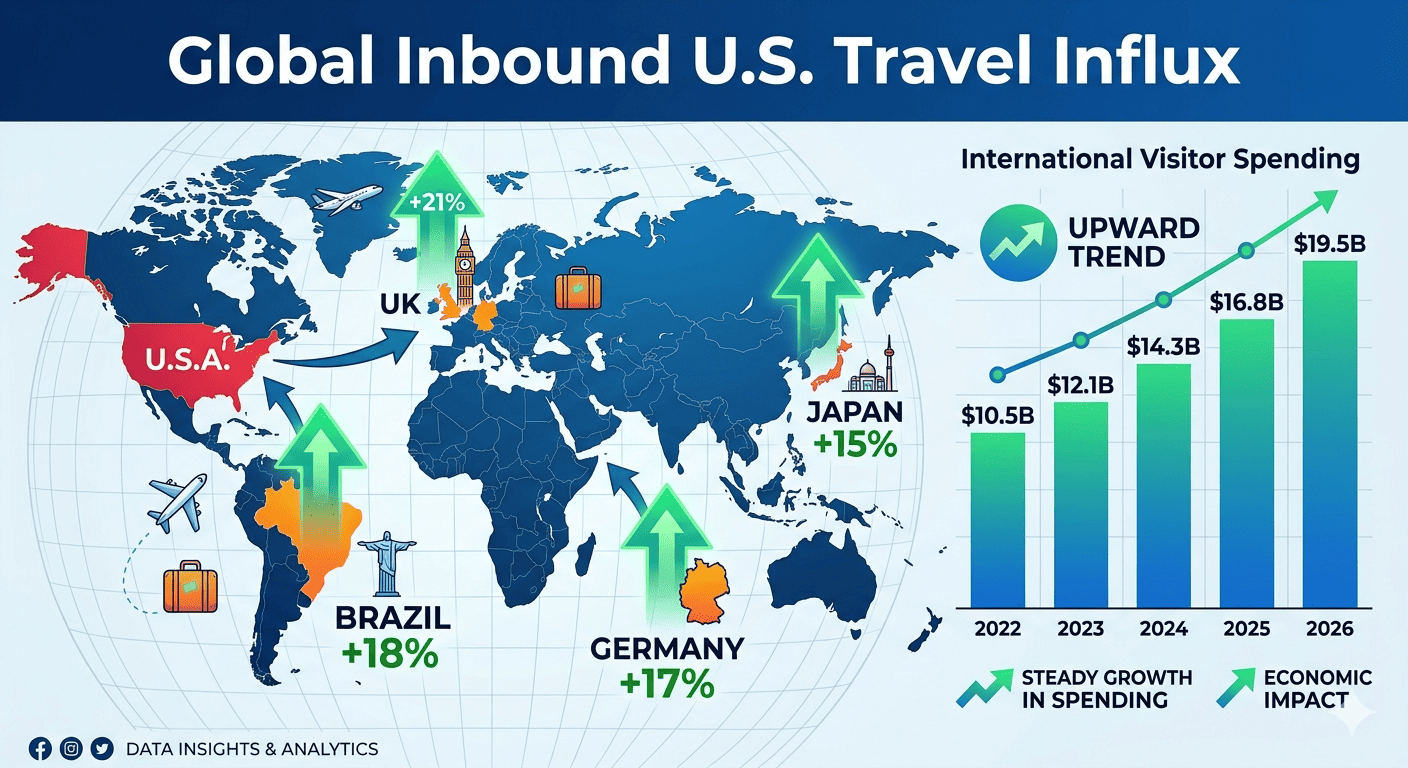
The composition of the U.S. travel rebound reveals a dynamic shift in global wandering patterns. While traditional European markets remain foundational bedrock, new corridors are driving the double-digit percentage growth metrics.
- The Transatlantic Corridor: Travel from the United Kingdom, Germany, and France has solidified, anchored by aggressive transatlantic route expansions and competitive business class pricing from major airline alliances.
- The Latin American Surge: Leisure and business travel from Brazil and Colombia has escalated sharply, heavily benefiting southern gateways and Florida entertainment hubs.
- The Asia-Pacific Return: Long-haul inbound traffic from Japan, South Korea, and Australia is showing its strongest sequential growth padding in years, restoring vital tourism revenue to West Coast corridors and Hawaiian hubs.
Shifting Itineraries: The Rise of "Secondary Destination" Exploration
While legacy hubs like New York, Los Angeles, Miami, and Orlando continue to draw the lion's share of international foot traffic, data reveals an intriguing evolution in visitor behavior. The modern international tourist is increasingly looking past the primary gateways to explore secondary and tertiary U.S. markets.
Driven by a global cultural shift toward sustainable tourism and experiential travel, international visitors are mapping out complex road trips through America's National Parks, exploring the musical heritage corridors of the American South, and booking extended stays in mid-sized cultural hubs like Austin, Portland, and Savannah.
This decentralization of international tourism spending is distributing economic benefits more equitably across the country. As airlines respond by launching direct international routes into secondary hubs, the barrier to exploring deeper into the American landscape continues to drop. With peak summer travel seasons approaching, the U.S. travel infrastructure is gearing up for a historic influx, proving that the enduring allure of the American journey remains completely intact on the world stage.