Indonesia AirAsia Trims Singapore Footprint: Direct Changi Routes Suspended
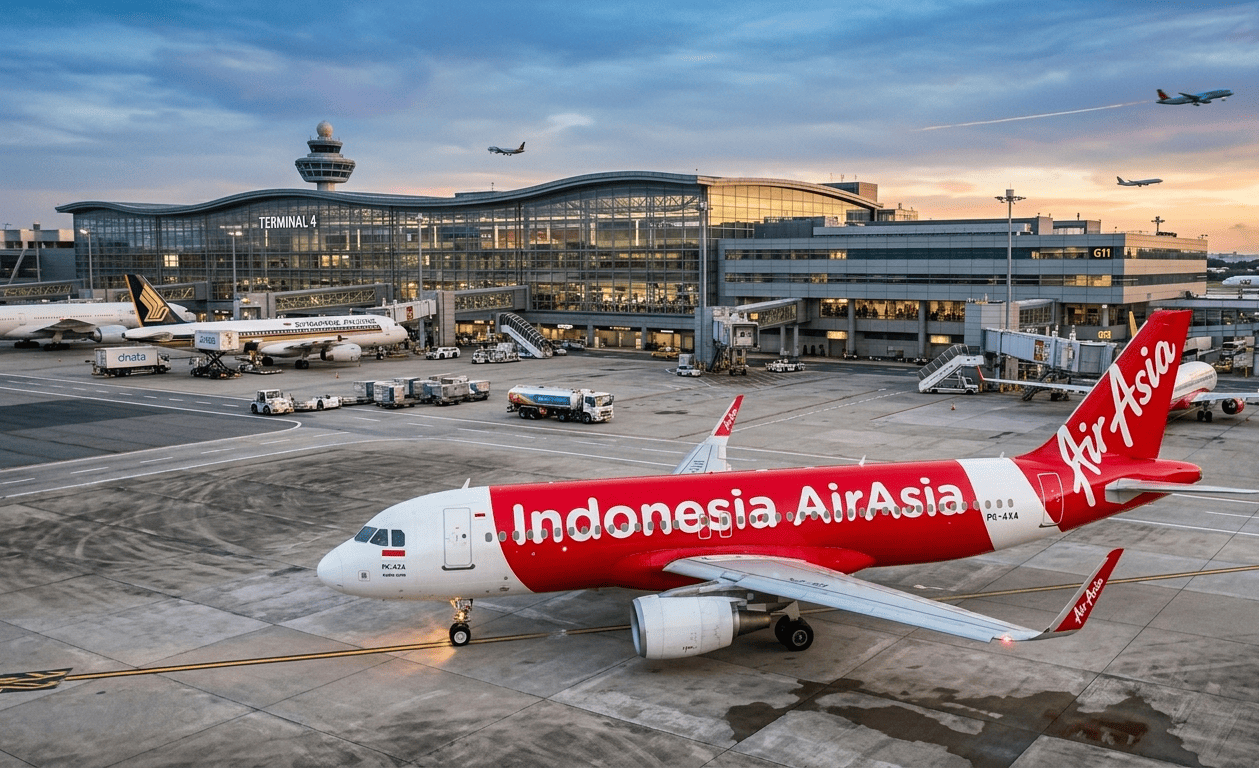
Low-cost carrier Indonesia AirAsia is officially suspending its final remaining direct connections to Singapore Changi Airport.
Beginning July 1, 2026, the budget airline will completely halt its daily non-stop flights between Jakarta (CGK) and Singapore (SIN). This follows the quiet termination of its direct flights connecting Bali and Singapore earlier this year, marking what industry analysts consider a near-total exit from the Singaporean market after 17 years of operation.
Rerouting Through Kuala Lumpur: The Fly-Thru Transition
Passengers currently holding tickets or looking to travel with the carrier between Singapore and major Indonesian destinations will no longer have direct, sub-two-hour options. Instead, the AirAsia Group website has converted these journeys into "Fly-Thru" services, requiring a mandatory connection through its primary hub at Kuala Lumpur International Airport (KUL) in Malaysia.
Depending on the length of layovers in Kuala Lumpur, travel times that once took less than two hours could now stretch significantly longer.

Jet Fuel Pressures and Changi Fees Force Strategy Shift
According to statement highlights from AirAsia X Group CEO Bo Lingam, the route cancellations are part of a wider network optimization strategy. The airline is reallocating fleet capacity toward stronger-performing regional corridors amid steep operating hurdles.
Aviation analysts point to two primary factors driving Indonesia AirAsia out of Changi:
- Surging Jet Fuel Costs: Geopolitical conflicts in the Middle East and subsequent disruptions to trade lanes have driven jet fuel prices upward, forcing airlines to cut marginally viable routes.
- High Airport Charges: AirAsia cited high airport fees at Singapore Changi Airport, where local passenger taxes and terminal costs have occasionally exceeded the base fare of a low-cost ticket.
Competition Steops In: Scoot Capitalizes on Capacity Drop
The sudden vacuum left by Indonesia AirAsia is expected to benefit regional low-cost competitors. Singapore Airlines' budget subsidiary, Scoot, is poised to capture a substantial chunk of the market share.
According to flight data analytics, Scoot is projected to grow its share of the Singapore-Indonesia seat capacity to 30% by July 2026, up from 20% just a year prior. Travelers seeking non-stop flights between Jakarta and Singapore will still find ample alternatives, with seven other legacy and budget carriers combining to operate more than 30 daily non-stop trips across the Java Sea.