How Destination Marketing Incentives & Direct Pay Schemes are Luring Travelers
The global travel industry has entered a hyper-competitive new era. Faced with a cost-conscious public rethinking value and an oversaturated digital landscape, Destination Marketing Organizations (DMOs) are abandoning passive advertising. Instead, tourism boards worldwide are weaponizing direct financial incentives, travel vouchers, and highly targeted, full-funnel digital campaigns to physically lure visitors to their borders.
This shift marks a major correction in how countries market themselves. According to industry data, traditional awareness campaigns (broad "Visit Country X" ads) plummeted from 59% of DMO budgets down to just 25%. In their place, tourism boards are funneling capital into lower-funnel, intent-based strategies designed to guarantee conversions and prove immediate economic return on investment (ROI).
Cash, Vouchers, and Tax Breaks: The Rise of Direct Incentives
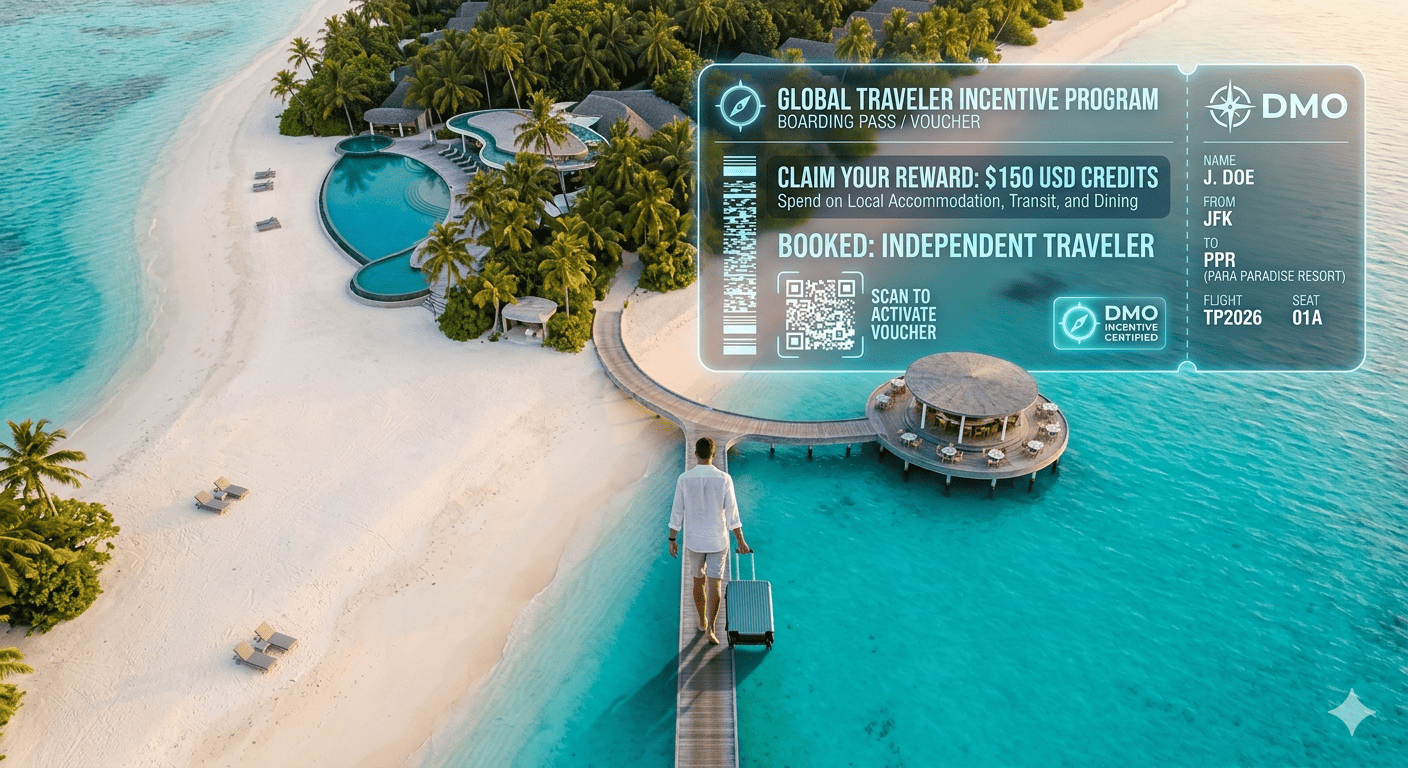
The most radical manifestation of this trend is the rise of direct traveler subsidization. Rather than spending millions on billboards, several major tourism bureaus are putting money directly into the pockets of tourists.
- Taiwan's Multi-Million Dollar Handout: Continuing its aggressive post-pandemic recovery playbook, Taiwan's Tourism Administration has successfully drawn millions of visitors by offering individual lucky draw incentives worth NT$5,000 (approx. $160 USD) to incoming independent travelers, spendable on accommodation and local transit.
- Malta's Independent Traveler Subsidies: The Malta Tourism Authority has previously pioneered schemes that directly paid independent travelers up to €200 each if they booked their stays directly through local three-, four-, or five-star hotels, targeted at revitalizing independent bookings.
- The "Work from Paradise" Tax Breaks: Caribbean and European micro-states have institutionalized long-term travel incentives. By waiving income taxes and slashing residential permit fees for digital nomads, destinations like Antigua & Barbuda and Croatia have structurally locked in high-spending, long-staying remote workers.
Intent Over Demographics: The 2026 Marketing Playbook
Beyond handing out financial perks, the architecture of travel marketing has fundamentally transformed. "Intent is replacing demographics," notes a benchmark travel marketing analysis. Tourism boards are no longer targeting a consumer because of their age or nationality; they are targeting them based on specific identity markers and search indicators.
1. Long-Form, SEO-Driven Travelogues
DMOs are shifting budgets toward evergreen, hyper-detailed content that captures travelers during the deep research phase. Tourism boards are partnering with creators to produce 2,000-to-5,000-word SEO-optimized destination guides. Because travel conversions for high-quality creator content hover between 3% and 7%—compared to a dismal 0.5% for traditional banner display ads—this long-form content acts as a multi-year lead generator.
2. The De-escalation of TikTok, The Rise of YouTube
In a striking pivot, global DMO investment in TikTok fell sharply from 49% down to 28%. While short-form video still holds viral appeal, marketing executives are finding that TikTok struggles to convert inspiration into actual plane tickets. Conversely, YouTube investment has risen to 55%, serving as a critical cross-funnel powerhouse where travelers look for in-depth itineraries, flight comparisons, and authentic cultural proof before booking.
3. AI-Friendly Data Architecture
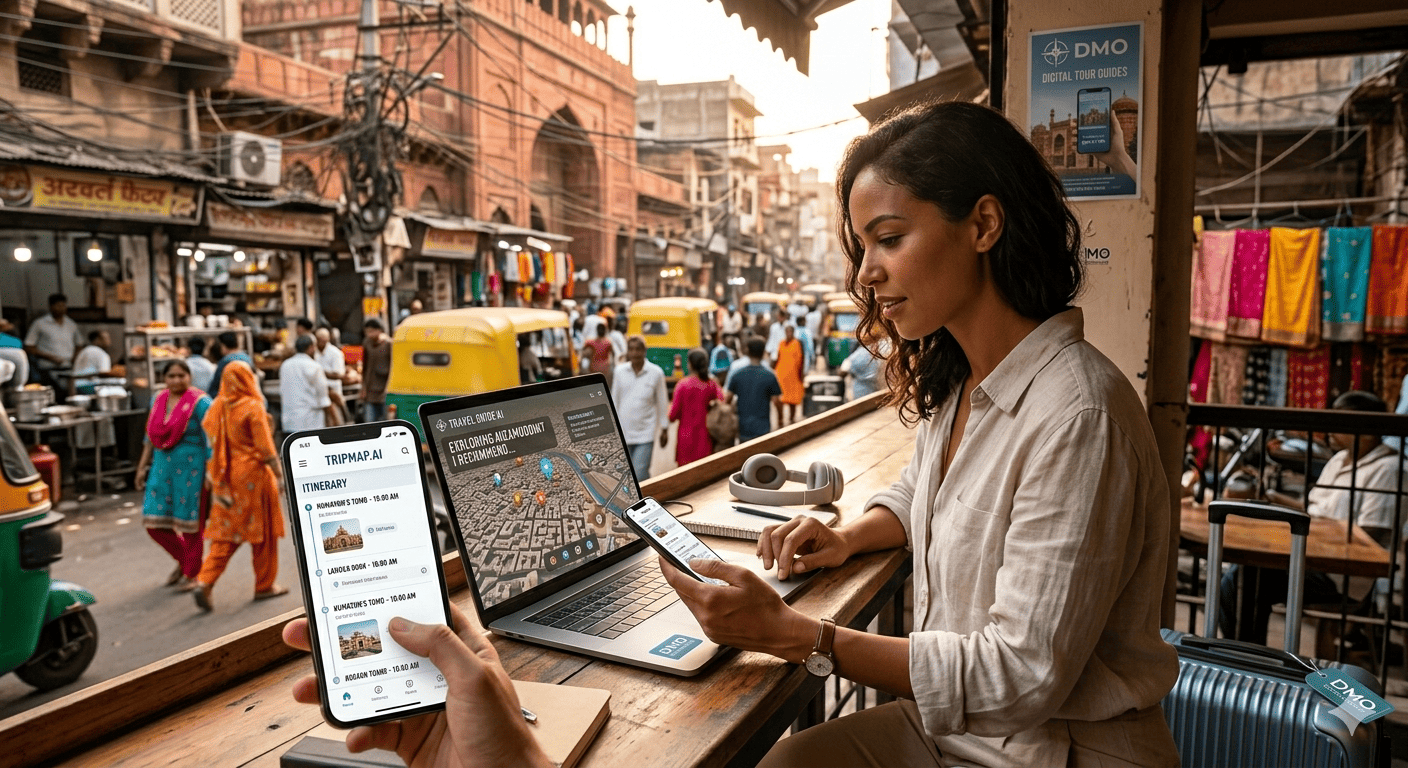
With more travelers utilizing generative AI tools to draft weekend itineraries and compute travel costs, forward-thinking cities are restructuring their entire digital presence. Tourism boards like Visit Corpus Christi are formatting their web modules into AI-scrappable FAQ sheets and clean data blocks. This ensures that when a user asks an AI chatbot for a "3-day wellness itinerary under $500," the city’s partnered hotels and restaurants are automatically fed into the response.
The Move to "Slow Travel" Incentives
Corporate and group incentive travel has similarly rebelled against the traditional, high-octane "packed tour." The dominant trend governing group destination choices is now "Slow MICE" (Meetings, Incentives, Conferences, and Exhibitions)—prioritizing fewer daily events and intentional downtime.
Over 81% of corporate incentive travel programs now mandate wellness, mindfulness, or local sustainability components. Destinations that want to capture high-value corporate retreats are explicitly highlighting low carbon footprints, farm-to-table experiences, and cultural immersion rather than standard resort buyouts.
Ultimately, the destinations winning the battle for global market share are those treating travelers as investors. By offering verifiable economic value through direct subsidies, optimizing for algorithmic search platforms, and ditching generic ads for hyper-niche storytelling, modern tourism boards are proving that the future of travel marketing lies in measurable, direct action.