
Gulfstream Advances 100% Sustainable Aviation Fuel (SAF) Fleet Testing
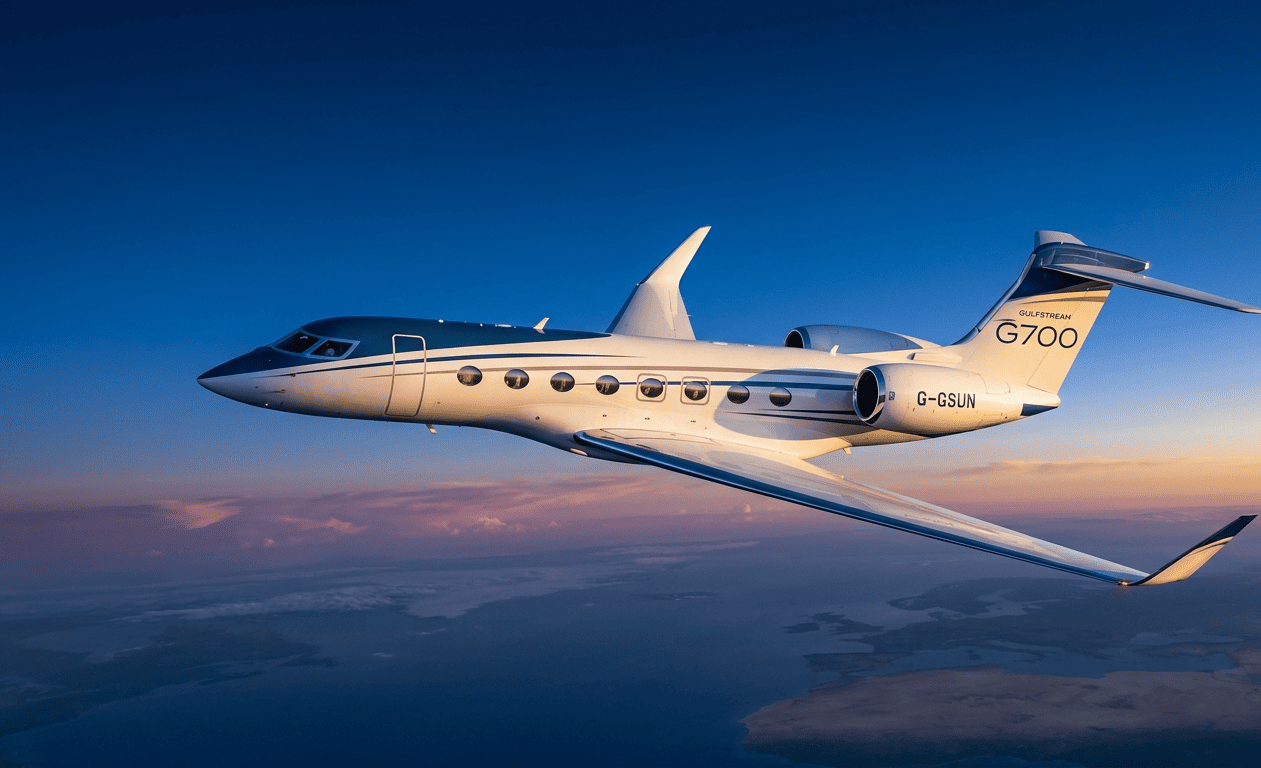
The push toward net-zero carbon emissions in business aviation has reached a critical testing phase. Gulfstream Aerospace Corp. continues to spearhead the industry’s transition by aggressively evaluating the performance, safety, and environmental characteristics of 100% unblended Sustainable Aviation Fuel (SAF).
By pushing testing limits beyond typical fossil-fuel alternatives, Gulfstream is validating how next-generation business aircraft operate using purely renewable feedstocks—advancing the industry closer to its overarching decarbonization goals.
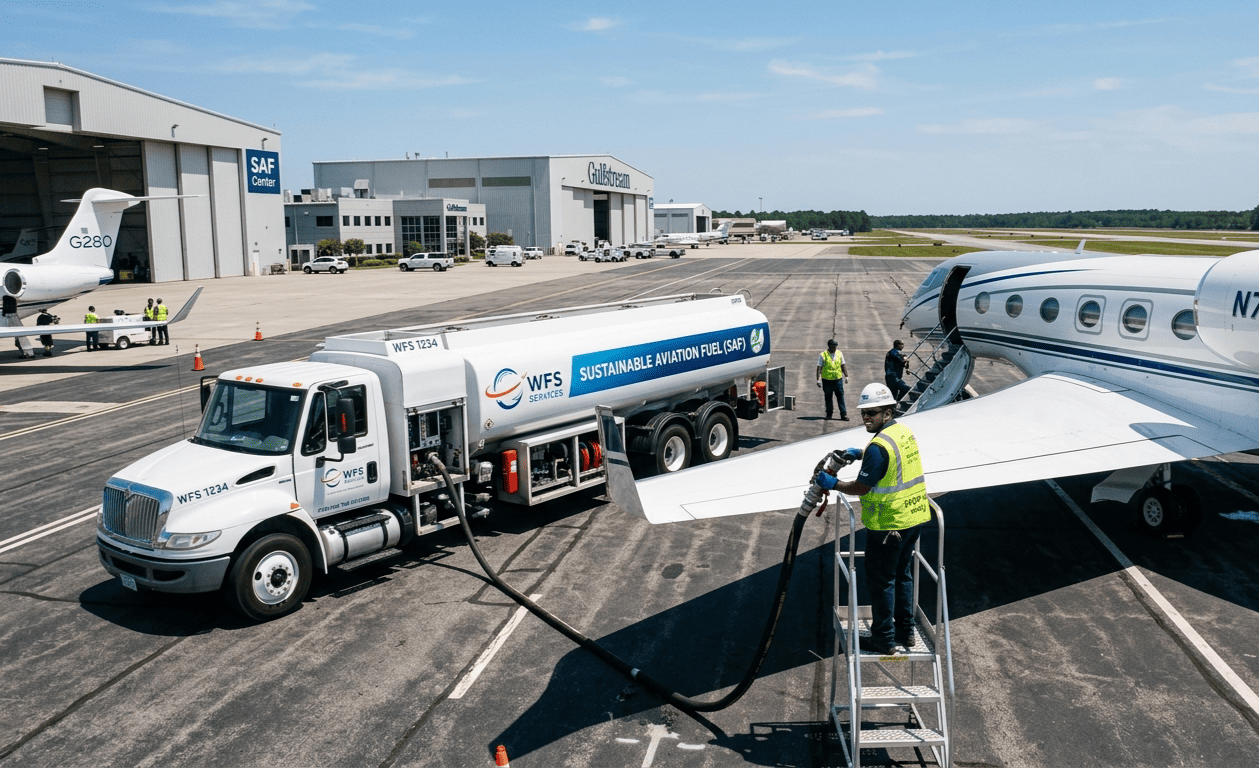
The Environmental Breakthrough: Zero Sulfur and Reduced Contrails
Recent testing milestones have focused intensely on understanding how "neat" (100% unblended) SAF performs under the extreme pressures of flight operations. In extensive engine testing on the flagship Gulfstream G700, powered by specialized Rolls-Royce Pearl 700 engines, researchers successfully measured the impacts of burning non-fossil-based fuels.
The technical findings represent a massive win for environmental science:
- Minimal to No Sulfur Contamination: Meticulous fuel integrity testing showed that the neat SAF contained zero sulfur, drastically improving local air quality around airports.
- Reduced Contrail Formation: Preliminary data demonstrates that low-sulfur, low-aromatic renewable fuels decrease the formation of climate-warming condensation trails (contrails) at high-altitude cruise levels.
- Massive Lifecycle Carbon Drop: The non-fossil HEFA (Hydroprocessed Esters and Fatty Acids) fuel utilized features a lifecycle$CO_2$ footprint that is up to 80% lower than conventional petroleum-based Jet A.
From Transatlantic Crossings to Next-Gen First Flights
Gulfstream has consistently used its flight-test program to demonstrate real-world operational viability. The company previously made history by completing the world's first transatlantic flight on 100% SAF using a Gulfstream G600. The nearly seven-hour endurance mission from Savannah, Georgia, to Farnborough, England, proved that unblended renewable fuel could withstand the freezing temperatures and extended durations of long-haul corporate travel.
This commitment to sustainability extends directly to its newest aircraft. The clean-sheet Gulfstream G400 successfully completed its inaugural test flight utilizing a sustainable aviation fuel blend directly from the company's Savannah campus, proving that environmental efficiency is being built into the DNA of the fleet from the ground up.
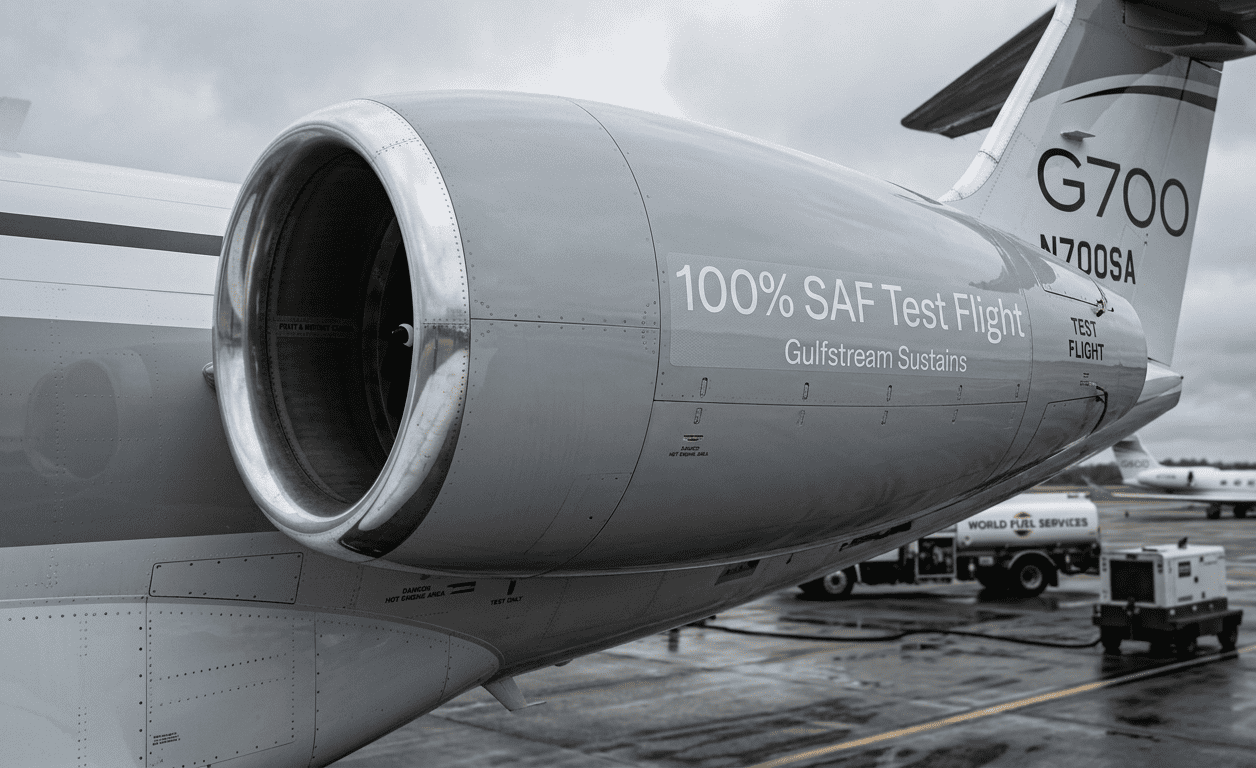
Collaboration Driving the Path to Net-Zero 2050
The success of these flight and ground test programs relies heavily on cross-industry coordination. Gulfstream's ongoing research events are supported by data collected via specialized instrumentation from NASA, the Federal Aviation Administration (FAA), Aerodyne Research, and the Missouri University of Science and Technology.
As a signatory of the World Economic Forum's Clean Skies for Tomorrow ambition statement, Gulfstream remains locked into the global aviation goal of achieving net-zero carbon dioxide emissions by 2050. By proving that high-performance business jets suffer zero performance degradation when swapping fossil fuels for renewables, the path toward planet-friendly flight is clearer than ever.
For more updates on corporate environmental milestones or to review full aircraft specifications, visit the official Gulfstream Sustainability platform or monitor aviation regulations on the Federal Aviation Administration portal.