
Emirates Rewrites the Travel Rules: Launches Aviation’s First-Ever ‘Conflict Protection’ Insurance
The global travel landscape has felt increasingly unpredictable recently. For travelers booking flights through the Middle East, recent regional airspace closures and geopolitical tensions have introduced a frustrating layer of anxiety to trip planning. Traditional travel insurance has notoriously left a glaring loophole here: if a conflict erupts or government travel advisories spike, standard policies often walk away, leaving passengers stranded with un-reimbursable hotel bills and canceled flights.
Emirates Airline has just made a massive move to close that gap.
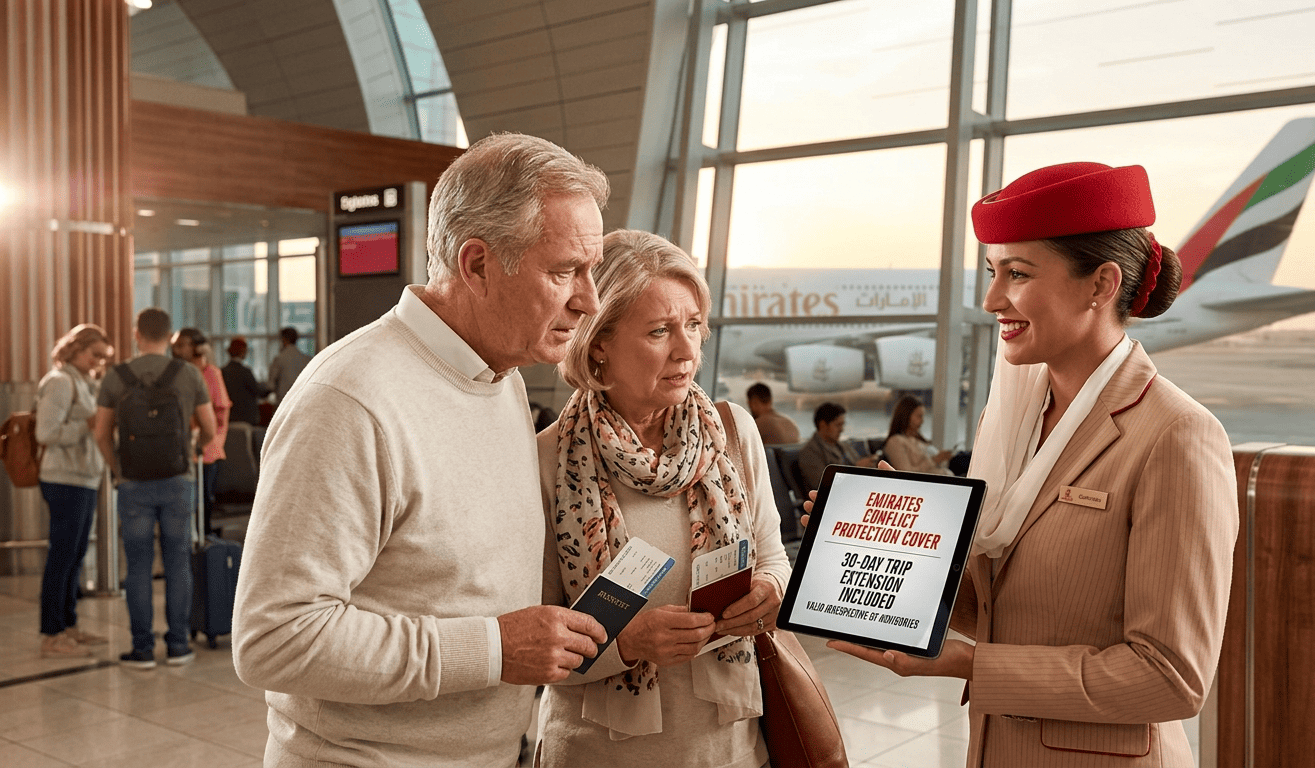
In an industry-first initiative, the Dubai-based carrier has officially launched a new Comprehensive Travel Cover package that explicitly includes conflict-related protection. Developed in partnership with Travel Guard, the policy is designed to restore flyer confidence and guarantee passenger protection even during major regional disruptions.
Here is a breakdown of what this groundbreaking insurance means for travelers, who actually needs it, and how it completely changes the "duty of care" rules for global aviation.
What Does Emirates' Conflict Protection Insurance Actually Cover?
The new policy functions as a standard, high-tier travel insurance plan but bundles in unprecedented protections specifically tied to regional instability and airspace disruptions.
1. Conflict-Related Medical and Emergency Care
If a passenger is caught in a conflict-related incident while traveling, the policy offers up to $25,000 in medical expense reimbursements. This is paired with the airline's standard unlimited worldwide medical expenses and emergency evacuation coverage.
2. The 30-Day Free Trip Extension
If a conflict or sudden airspace closure grounds a traveler or prevents them from returning home, the insurance provides a complimentary trip extension of up to 30 days to cover ongoing logistics and support.
3. Immunity to Government Travel Advisories
This is the true game-changer. Most commercial travel insurance policies feature strict exclusion clauses: if your government issues a "Do Not Travel" warning for a region, your coverage is instantly voided. Emirates’ new policy remains fully valid regardless of shifting government travel advice, removing the fear of being left entirely exposed if a geopolitical situation escalates mid-trip.
4. Airspace Closures and Alternative Rerouting
Operationally, Emirates has coupled this policy with an aggressive customer-first promise. If conflict forces airspace to close and Emirates flights are grounded, the airline will actively handle and fund accommodations. More importantly, they will rebook disrupted passengers onto competing, rival airlines at no additional cost if their own fleet cannot fly.
The Strategic Underbelly: Filling the "EU261" Regulatory Gap
While Emirates is framing this as the "world's most comprehensive travel insurance," industry analysts note that the product serves a brilliant operational purpose: it monetizes a massive regulatory gap between Western and Eastern flyers.
Under stringent European aviation laws (specifically EU Regulation 261/2004), any passenger departing from an EU or UK airport is already legally entitled to standard duty-of-care protections. If a flight out of London or Frankfurt is canceled due to an airspace emergency, Emirates is already legally required to foot the bill for hotels and find a way to get that passenger home, even if it means buying them a ticket on a competitor.
However, passengers originating out of the United States, Australia, India, or Southeast Asia enjoy no such legal fallbacks. If they get stuck transiting through Dubai due to a sudden regional closure, they historically relied on the airline's discretionary goodwill or absorbed the massive out-of-pocket costs themselves.
By launching this paid add-on, Emirates is giving non-EU travelers a way to buy the exact same bulletproof contractual guarantees that European travelers get by law.
Do You Need to Buy It?
The policy went live on June 17, 2026, and is available to purchase immediately on Emirates.com during the booking process or retroactively via the "Manage Booking" portal. It is initially rolling out across key global markets, including the UAE, Bahrain, Kuwait, most of Europe, Singapore, and Canada.
Before checking the box and paying the premium on your next trip to or through Dubai, run through this quick checklist:
- Check Your Departure Point: If your journey begins in the EU or the UK, your statutory rights under EU261 already protect you against catastrophic flight disruptions. You may not need to pay extra for the rebooking guarantees.
- Audit Your Credit Card Benefits: Premium travel credit cards (like the Chase Sapphire Reserve or Amex Platinum) offer robust built-in trip delay and interruption insurance. However, you must read the fine print. Check your card's benefits guide specifically for "War, Insurrection, or Hostilities" exclusions. If your card excludes conflict zones, Emirates' add-on provides genuine, vital gap coverage.
- Consider Your Origin: For long-haul transfer traffic originating out of Asia, India, or Australia—where local passenger protection laws are weaker—this policy is highly recommended to avoid catastrophic out-of-pocket losses during a regional emergency.
Dubai's transit traffic dropped noticeably earlier this year following regional friction, and this insurance product is a clear, calculated strategy by Sir Tim Clark and the Emirates leadership to pull nervous flyers back into the fold.
By taking the financial risk out of geopolitical disruptions, Emirates isn't just selling peace of mind—they are establishing a brand-new benchmark for what an airline's "duty of care" should look like in a highly volatile world.