Egypt Expands Airline Incentives: $165M Charter Flight Program Launched
In an aggressive move to insulate its booming tourism sector from geopolitical headwinds and rising global energy costs, the Egyptian government has authorized a massive expansion of its aviation stimulus initiatives. The Ministry of Tourism and Antiquities is officially boosting the budget for its charter flight incentive program to an unprecedented $165 million USD for the upcoming 2026/2027 fiscal year.
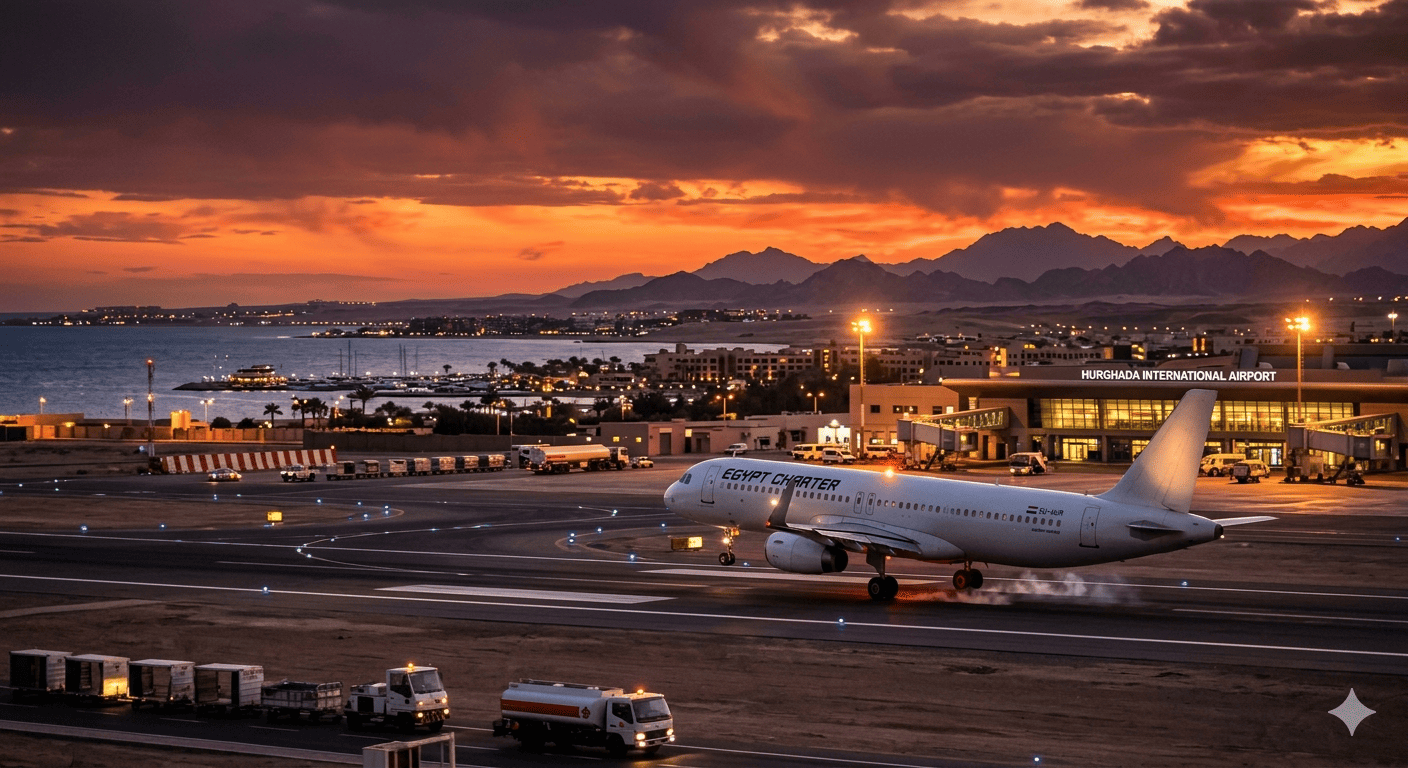
This represents a substantial 6.4% year-over-year increase, signaling Cairo’s determination to keep international air corridors wide open. The financial injection is strategically paired with an exceptional emergency relief package approved by the Cabinet. Chaired by Prime Minister Mostafa Madbouly, the government has instituted severe cuts to airport charges and steep discounts on ground handling fees at Hurghada and Sharm El-Sheikh international airports.
Running through the peak summer months from June until the end of August 2026, these measures are explicitly designed to lower the operational threshold for international carriers, compelling them to ramp up frequencies to Egypt’s key resort gateways.
High Yields: A Proven Return on Aviation Capital
The decision to scale up direct airline subsidies comes on the heels of staggering financial returns. According to Tourism Minister Sherif Fathi, Egypt's charter flight incentive program yielded an incredible $66.50 return on investment (ROI) for every single dollar spent during the first quarter of 2026.
This high-performance funding framework triggered an astronomical 43.5% year-over-year surge in total Q1 arrivals, pulling in 5.6 million tourists between January and March alone. In terms of revenue, this first-quarter spike translated into a massive $5.1 billion USD influx, up from $3.8 billion USD during the same window last year.
"Aviation is the absolute lifeblood of our growth strategy, given that over 95% of our inbound tourists arrive by air," noted Civil Aviation Minister Sameh El-Hefny in a joint ministerial briefing. "By actively underwriting fuel volatility risks and slashing local ground handling costs, we are ensuring that global airlines view Egypt not just as a highly desirable destination, but as an operationally profitable one."
The localized data underscores the massive traffic these gateways are handling. In April alone, Hurghada International Airport clocked 7,125 flights carrying over 1.06 million passengers, while Sharm El-Sheikh handled 4,916 flights moving over 761,000 travelers. The expanded incentives aim to push these numbers to historic highs over the summer.
Offsetting Geopolitical and Fuel Volatility
The expansion of the incentive program is a calculated defensive maneuver. While Egypt rode an all-time record of nearly 19 million tourists through 2025—thanks to a highly competitive Egyptian pound and the monumental grand opening of the Grand Egyptian Museum (GEM)—2026 has brought severe external challenges.
Escalating regional tensions in the Middle East over March and April triggered widespread airspace closures across neighboring states. While Egypt successfully capitalized on this initially by keeping its own airspace open and absorbing rerouted regional traffic, the prolonged conflict, combined with spiking jet fuel prices, eventually forced a 16% year-over-year contraction in April bookings.
Rather than adopting a wait-and-see approach, the state has intervened directly to alter the market dynamics. By spreading the $165 million budget across critical hubs—including Luxor, Aswan, Taba, Borg El Arab, and the Mediterranean's booming Alamein coast—Egypt is protecting its multi-destination travel pipeline.
Private Sector Follows the State's Lead
The government's heavy financial backing has injected massive confidence into the private sector. Enticed by the guaranteed state subsidies and subsidized ground costs, local travel conglomerates are stepping in to scale capacity. Egypt's premier tourism giant, Travco, has finalized plans to launch its own dedicated charter airline by the fourth quarter of this year, a move designed to directly capture the subsidized European and Gulf flight streams.
Simultaneously, the Civil Aviation Ministry is pushing ahead with a sweeping modernization scheme, including plans for a massive terminal expansion at Cairo International Airport to boost total capacity to over 60 million passengers annually.
With the ultimate national goal fixed firmly on drawing 30 million visitors annually by 2030, Egypt's message to the global aviation market is clear: no matter the global headwinds, Cairo will make it profitable to fly.