EES Border Delays Could Cost Europe $45 Billion, WTTC Warns
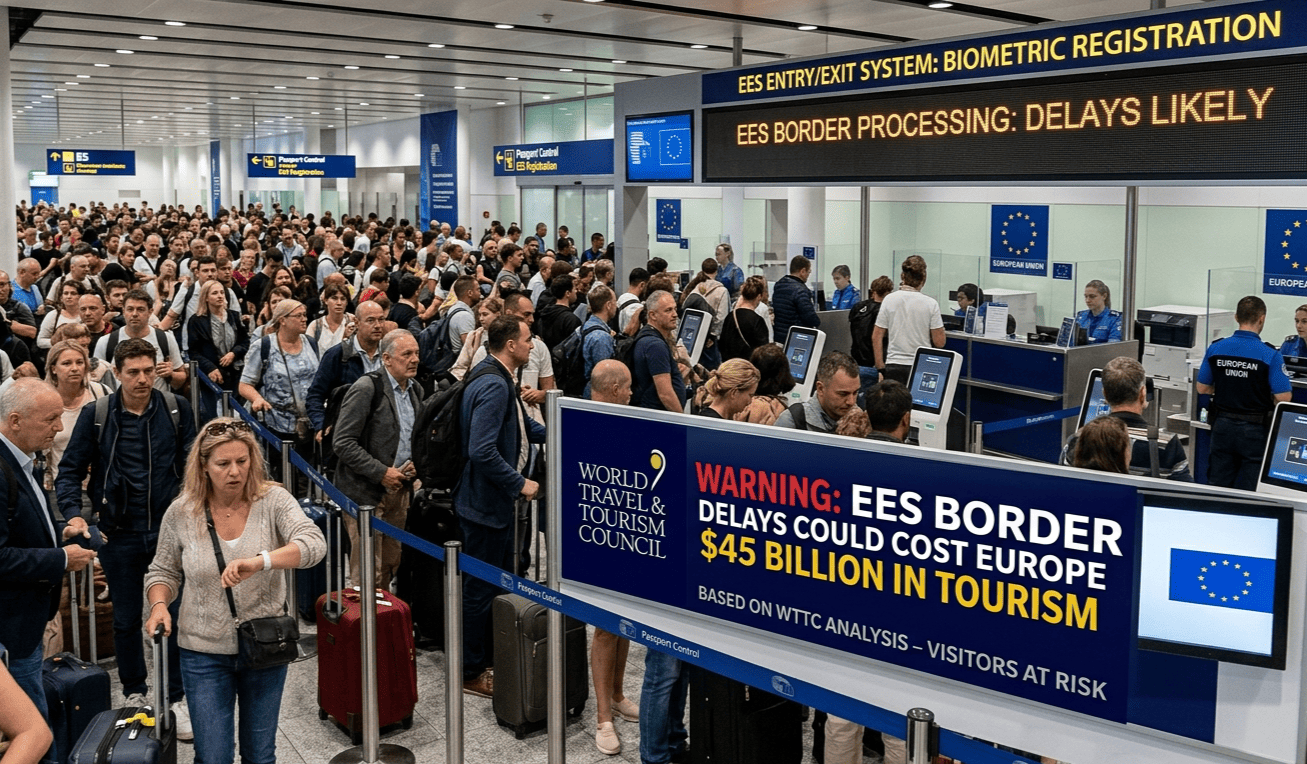
The European travel economy is staring down a massive crisis, and the culprit isn’t inflation, high fuel prices, or geopolitics. It’s the line at the airport passport gate.
According to a sobering new economic impact study released by the World Travel & Tourism Council (WTTC), Europe could lose up to 41 million international visitors if the European Union's upcoming digital border rollout triggers multi-hour bottlenecks. If travelers find themselves trapped in three-to-four-hour queues at Schengen Area checkpoints, roughly a third of them will simply take their wallets and vacation elsewhere.
That behavioral shift carries an astronomical price tag: an estimated $45.4 billion hit to the European tourism industry.
The Irony of the Biometric Bottleneck
What makes this looming disaster so frustrating is that travelers actually want this technology. The WTTC surveyed thousands of holidaymakers across major long-haul markets—including the UK, the US, Canada, and Australia—and discovered that 65% of them actively support the EU's new Entry/Exit System (EES).
People get the premise. They like the idea of tighter border security, and they appreciate that registering their facial images and fingerprints now will theoretically make future transit much faster.
The problem isn't the tech; it's the reality of the airport floor. While 65% support the system on paper, that goodwill completely evaporates the moment the line stops moving. Travelers cited missing connecting flights, missing return flights, and general administrative hassle as major anxieties. For 39% of British travelers—who are particularly sensitive to Schengen border changes—a guaranteed three-hour line is a dealbreaker.