Dubai Hotels Shift Focus to Residents: Luxury Staycations Hit Record Low Rates
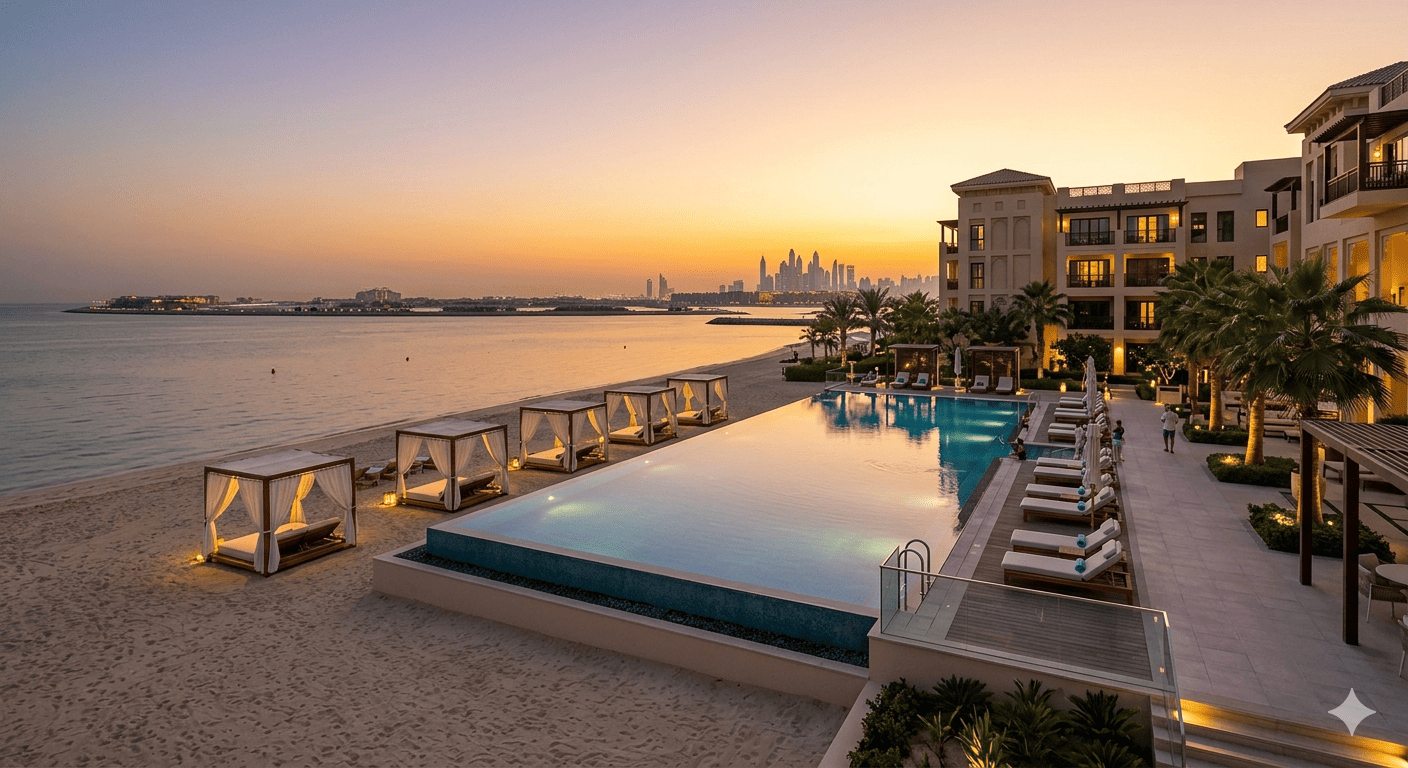
Dubai’s premier hospitality sector is undergoing a profound structural pivot. Long celebrated as an exclusive playground for affluent international travelers, the emirate's ultra-luxury resorts—particularly those anchoring iconic destinations like Palm Jumeirah—have dramatically shifted their target market toward local UAE residents.
Driven by recent regional conflicts and subsequent international travel volatility that began early this year, average hotel occupancy rates have experienced a sharp correction. Properties that historically boasted year-round occupancy levels exceeding 80% have faced significant weekday shortfalls, prompting operators to roll out aggressive domestic pricing strategies and staycation incentives to stabilize cash flow.
The resulting pricing environment is unprecedented. Five-star properties that previously commanded between AED 800 and AED 5,000 per night have introduced residents-only rate slashes of up to 50% to 80%, effectively democratizing high-end luxury for the local expatriate and Emirati population.
A Weekend Lifeline Driven by Domestic Demand
The local market has responded with massive enthusiasm. While weekday occupancy across luxury resorts currently hovers at a quiet 20% to 30%, weekends tell an entirely different story. Backed by residents-only deals and tailored packages, weekend occupancy rates are regularly surging back to between 70% and 90%.
"Luxury in Dubai has suddenly become truly accessible for residents," says Fadi Iskandarani, a five-year Dubai resident who recently booked his first weekend stay at a premier resort on Palm Jumeirah. "Before this shift, these properties felt exclusively reserved for ultra-wealthy international tourists. Now, a slice of that opulence is within reach for local professionals."
Industry leaders acknowledge that this domestic influx is a vital financial bridge. At properties like the Thai-inspired Anantara The Palm Dubai Resort, the surge in weekend staycations has provided the operational buffer necessary to keep the books cash-positive and preserve jobs.
The New Playbook: From 'Overnight Stays' to Flex-Living
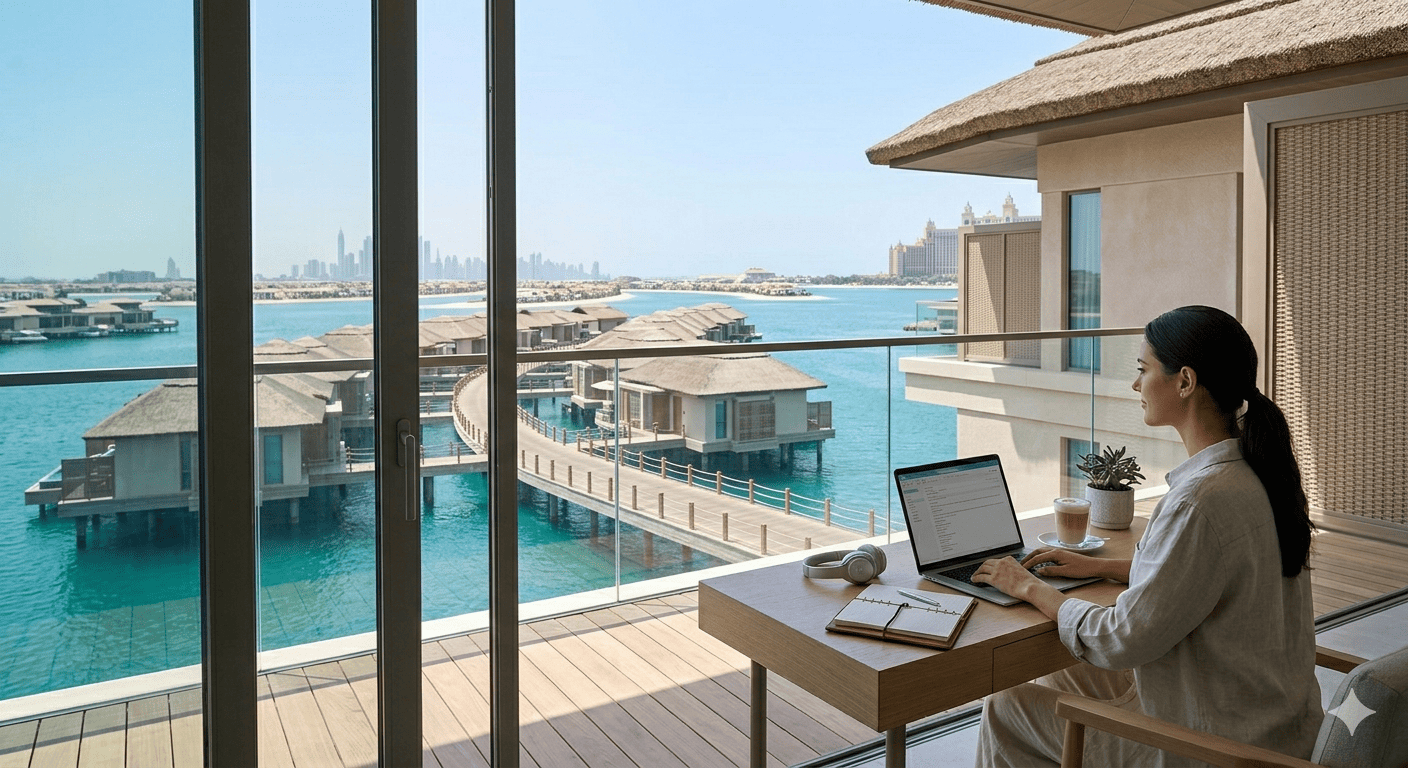
To sustain this momentum, hoteliers are moving past the standard room-and-breakfast model. Recognizing that residents treat local hotels as spaces for escapism, comfort, and remote work, brands are heavily leaning into extended-stay and "bleisure" (business + leisure) packages.
- Extended Stay Solutions: Mid-tier and premium operators are capturing remote workers and relocating professionals with flexible, all-inclusive 30-night packages. Brands like Rove and Citymax have led the value segment with monthly rates starting as low as AED 2,699 to AED 3,499, wrapping utilities, high-speed Wi-Fi, and gym access into a single fee to bypass standard residential leasing hurdles.
- Elevated Experiences: High-end boutique concepts are bundling premium dining with stays. Properties like SO/Uptown Dubai have introduced highly competitive "Brunch & Bed" packages, packaging curated culinary events directly with overnight accommodation for a marginal premium.
- Deep Wellness & Dining Discounts: Elite properties like Atlantis The Royal and Bvlgari Resort have structural resident discounts ranging from 25% to 30% off across room types, spas, and culinary portfolios to capture the domestic dining market.
Long-Term Sustainability Concerns
While the domestic pivot has proven to be an effective shield, hospitality executives caution that staycations cannot entirely replace international visitor pipelines over an extended horizon.
International visitors typically book stays spanning one to two weeks, whereas domestic staycationers are structurally capped at one- to two-night weekend bookings. Furthermore, the industry faces an imminent test as the peak summer months of July and August approach—a period when many expatriate families traditionally exit the UAE to return to their home countries.
To offset a potential summer lull, forward-looking properties are taking a hybrid approach. Some, including the iconic Burj Al Arab, have strategically used this lower-volume period to temporarily close specific wings for world-class renovations and structural upgrades. Concurrently, the Dubai Department of Economy and Tourism (DET) continues to roll out major public-private marketing frameworks under the D33 Economic Agenda to reinforce Dubai's operational readiness and long-term global competitiveness.
For now, the domestic market remains the undisputed anchor of Dubai hospitality, offering residents an unmatched window of luxury at an affordable price point.