Canadian Travel to Cancun Surges as Vacationers Pivot Away from US Destinations
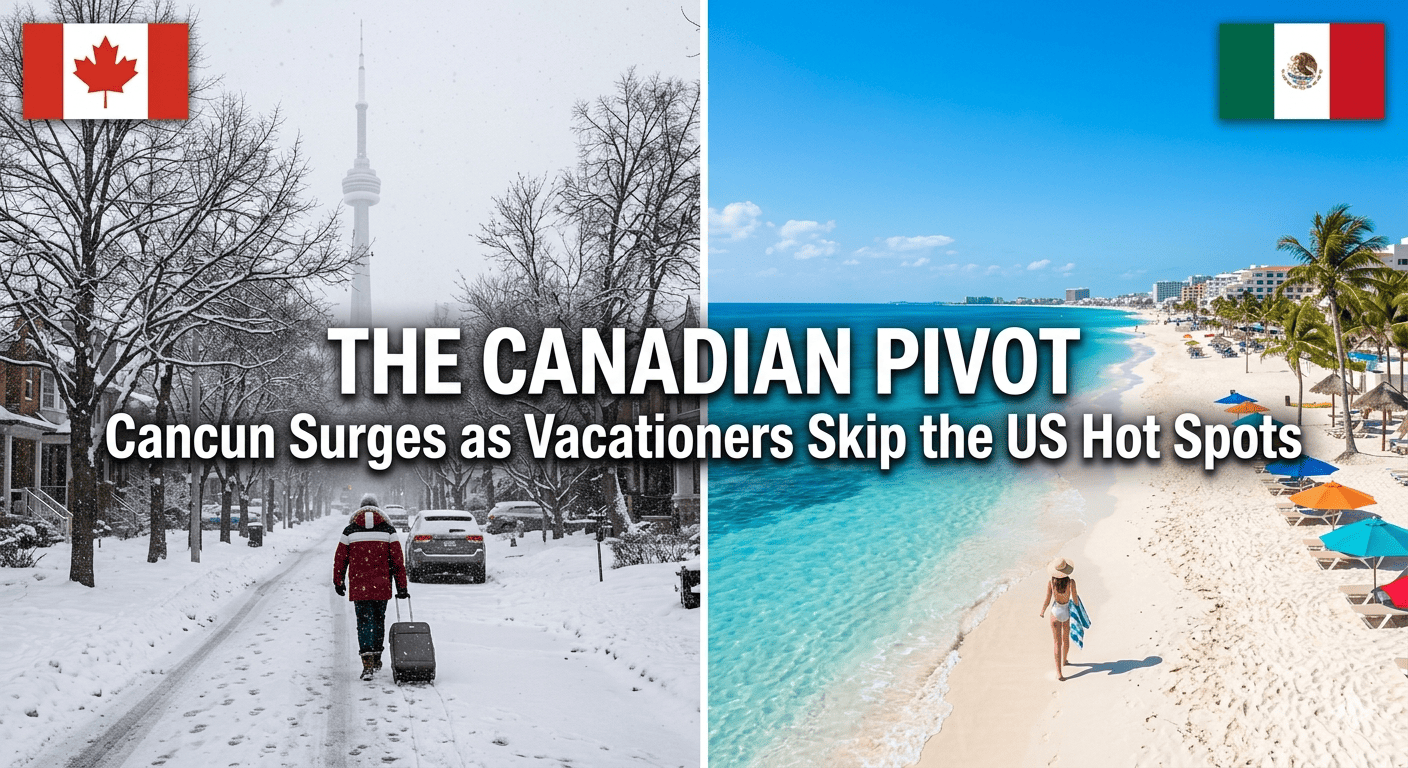
In a historic reshuffling of North American travel habits, Canadian visits to the Mexican Caribbean are hitting unprecedented highs. Driven by shifting macroeconomic factors and aggressive expansion by major airlines, the air corridor between Canada and Cancun has rapidly transformed into one of the most lucrative travel pipelines in the region.
According to aviation and border data, the Toronto–Cancun air corridor has officially become the busiest international route into Mexico, overtaking traditionally dominant American travel hubs like Dallas and Houston for the first time. During recent seasonal peaks, travel from Toronto to the Mexican Caribbean jumped by 26.1%, while Montreal recorded a matching 24% surge in passenger volume.
This traffic boom follows an already stellar growth trajectory recorded by the Mexico Ministry of the Interior, which saw over 2 million Canadian air arrivals filter into the country, marking an 11.4% year-over-year jump and a staggering 18.1% surge over pre-pandemic baselines.
Shifting Away From the US Dollar
Industry analysts note that a primary catalyst for the sudden Canadian travel to Cancun surge is a tactical departure from traditional US holiday destinations. Severe bilateral trade friction and steep tariffs imposed by the US administration on Canadian exports have driven an abrupt 24% collapse in Canadian leisure travel to the United States.
Compounding the political friction is a stark currency reality. With the Canadian dollar weakening against a dominant US greenback, traditional snowbird nests like Florida, California, and Las Vegas have become prohibitively expensive for middle-class families and retirees.
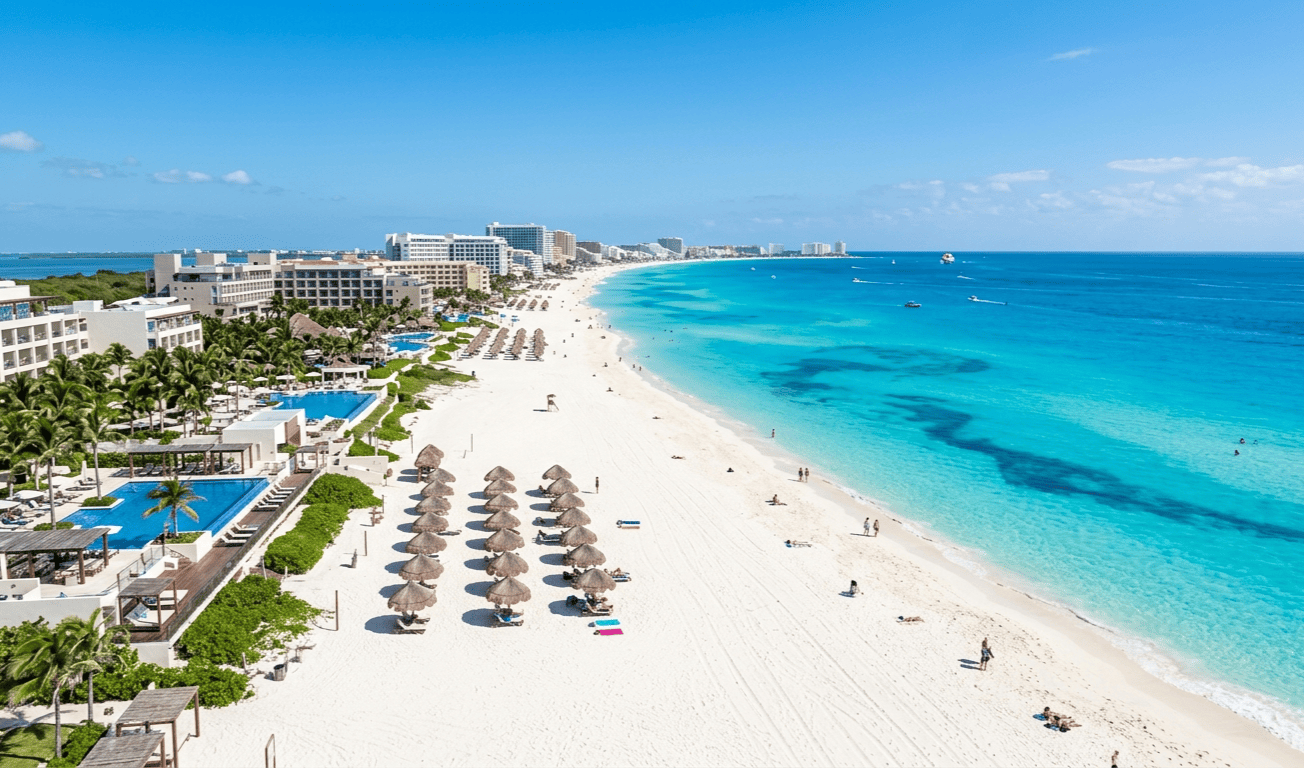
As outlined by international coverage on Tourism and Society, Mexico provides an incredibly competitive luxury and hospitality alternative. Canadian travelers repeatedly cite superior premium all-inclusive value and simpler border processing as major reasons for spending their vacation capital in Quintana Roo over the US.
Airlines React to Unprecedented Demand
To capitalize on this structural market shift, major northern carriers are radically rewriting their network maps. Air Canada recently announced an 18% capacity boost to its Mexican network, deploying wider, dual-aisle aircraft and increasing frequencies to Cancun, Puerto Vallarta, and Mexico City.
Simultaneously, seasonal holiday operators like Transat and Sunwing have established direct, year-round regional connections linking secondary Canadian hubs straight to the tropics.
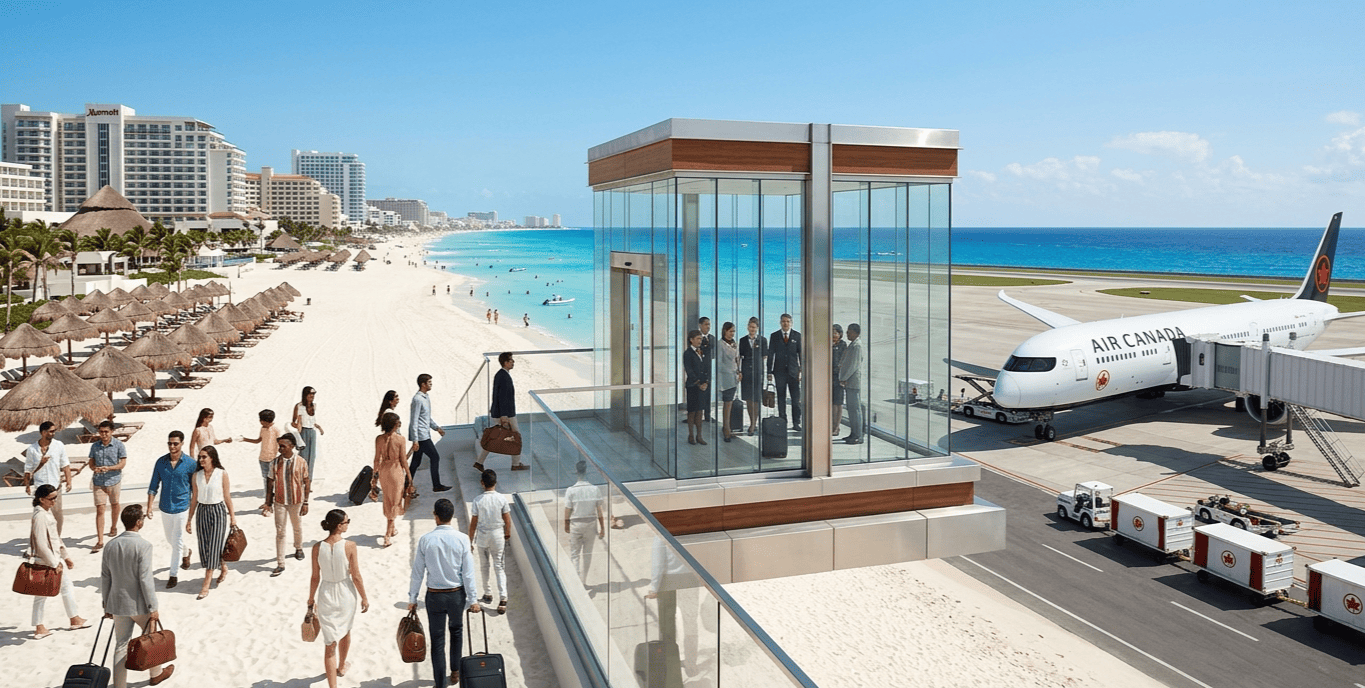
On the receiving end, local infrastructure is working overtime to maintain high-velocity passenger movement. According to data reported by TravelPulse Canada, Cancun and the broader Riviera Maya region have maintained hotel occupancy rates hovering above 85%. To prevent terminal bottlenecks during peak arrival waves, federal airport authorities have deployed advanced automated e-Gates at Cancun International Airport, drastically slashing immigration wait times for incoming international flights.
Beyond Sun and Sand: Romance and Luxury Boom
The demographic profile of the Canadian traveler heading south is also evolving. While families and winter-weary snowbirds still make up a substantial block of the volume, local destination management teams report a massive spike in high-end romance tourism.
Cancun and the Riviera Maya have aggressively leaned into this trend, positioning the region as a primary hub for bespoke destination weddings, luxury honeymoons, and wellness retreats. With massive capital injections targeted toward updating eco-luxury resorts and scaling cultural tourism ahead of the highly anticipated FIFA World Cup crowds, the destination is securely positioned to sustain its northern momentum for years to come.