AI-Powered Travel: How Airlines Are Reducing Delays in 2026
For decades, flight disruptions have been treated as an expensive, unavoidable cost of doing business in the aviation industry. When a thunderstorm hit a major hub or a mechanical part failed unexpectedly, a chaotic domino effect inevitably rippled across the global network, leaving flight crews stranded, airplanes misplaced, and thousands of travelers trapped in agonizing terminal queues.
But in 2026, the aviation industry is undergoing a quiet, data-driven revolution. Airlines are moving aggressively away from a reactive stance and embracing a predictive one. Driven by massive leaps in agentic AI, multimodal machine learning models, and integrated operations platforms, carriers are fundamentally changing how they manage airspace, predict maintenance, and handle schedule disruptions.
Here is how AI-powered travel is actively dismantling the core causes of flight delays in 2026.
Breaking the Chain: Simultaneous Disruption Management
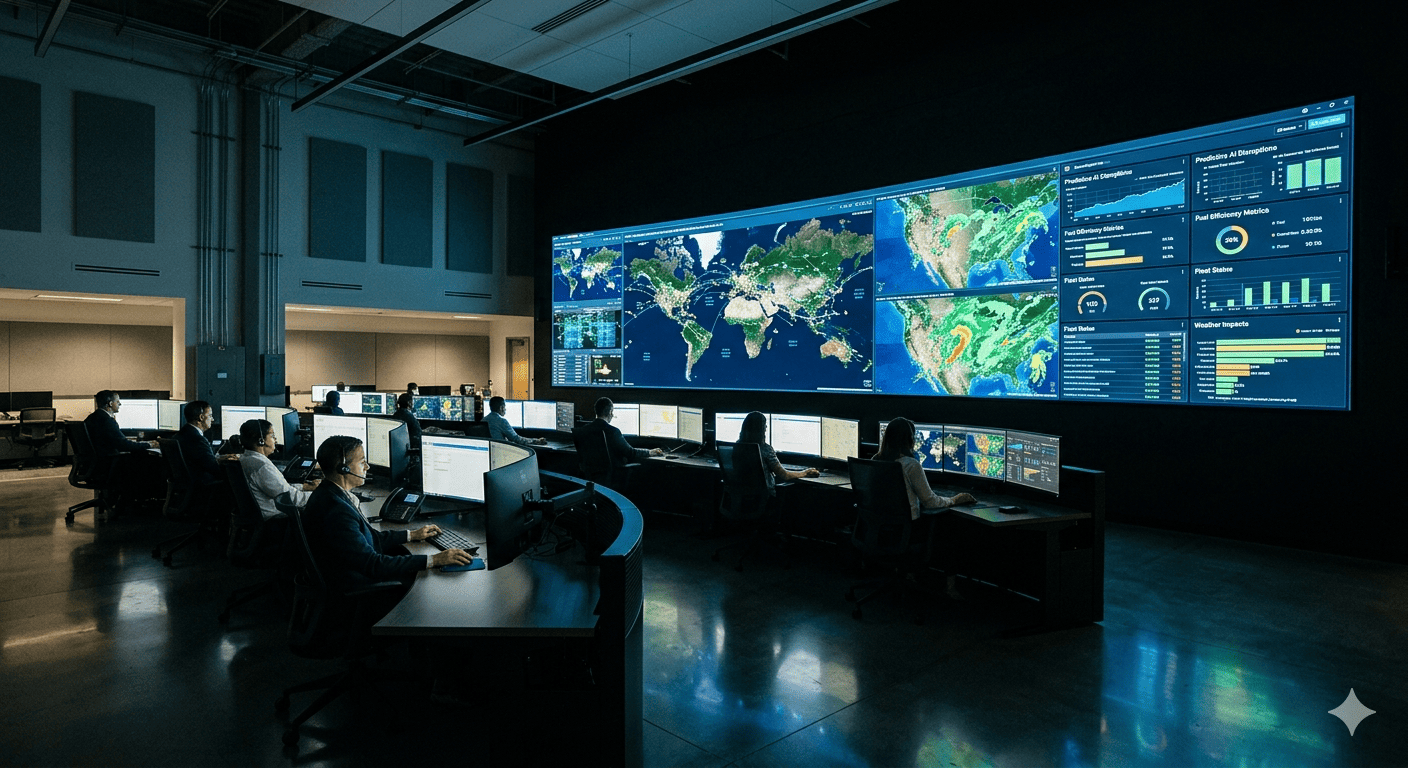
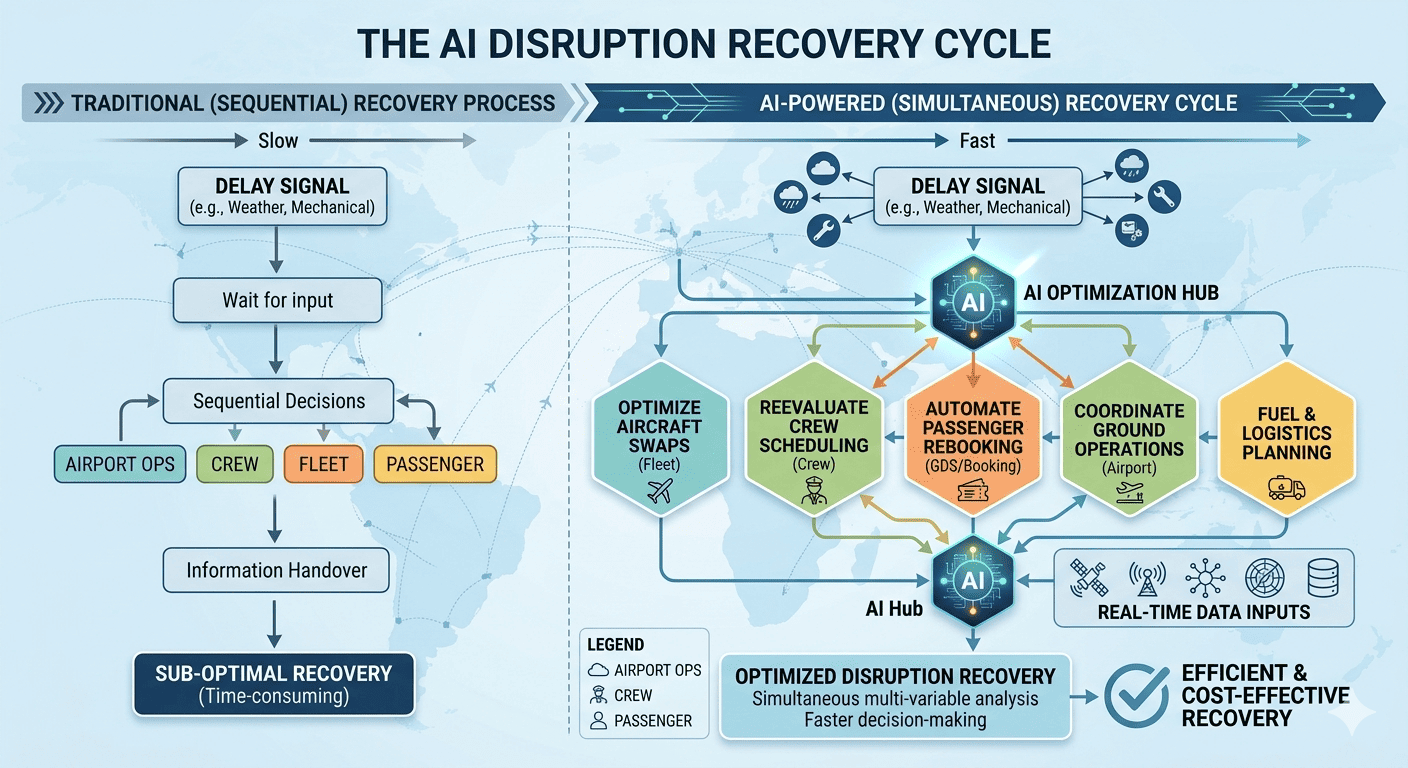
Historically, when an emergency or weather event forced a flight cancellation, airline Operations Control Centers (OCCs) had to solve the resulting puzzle sequentially. First, they would reassign the physical aircraft. Next, they would hunt for a legal crew that hadn’t timed out on duty hours. Finally, they would pass the problem to passenger services to begin rebooking travelers. Each isolated step took time, often creating new problems down the line.
In 2026, tech giants and aviation software firms are destroying this legacy bottleneck. A prime example is global transport IT provider SITA’s recent acquisition of Big Blue Analytics and its OCC Assistant Manager (OCCam) platform.
Instead of sequential sorting, these advanced AI-enabled systems evaluate every single operational constraint simultaneously. The moment a disruption hits, the algorithm cross-references fleet availability, maintenance logs, pilot rest rules, and passenger connecting itineraries to generate multiple, mathematically optimized recovery plans within minutes. In live operational environments, this shift to integrated intelligence has cut airline disruption costs by up to 30%, drastically reducing the time a flight remains delayed on the tarmac.
Predictive Maintenance: Fixing Planes Before They Break
Mechanical faults account for a significant percentage of preventable primary gate delays. Traditionally, a part was replaced when it failed or during scheduled calendar intervals.
Today, aircraft are floating data centers equipped with thousands of AI-mapped sensors. Machine learning algorithms continuously analyze live engine health indicators, structural telemetry, and historic component wear patterns.
- Early Warning Flags: The AI flags micro-deviations in component behavior long before a warning light illuminates in the cockpit.
- Overnight Swaps: If a pump or valve shows signs of early degradation, the system triggers a preventative alert. The airline can swap the aircraft overnight, ensuring repairs take place seamlessly during scheduled down-time.
- Protecting Morning Departures: By fixing the issue while the airport sleeps, the carrier prevents the dreaded first-wave morning departure cancellations that typically cascade through the rest of the day’s schedule.
Total Airport Management and Intelligent Air Traffic Control
The transformation isn't limited to individual airline fleets; it has completely altered airport infrastructure. Major international hubs, such as London Heathrow, have begun implementing AI-driven operation platforms (such as the AIRHART ecosystem) to achieve "Total Airport Management".
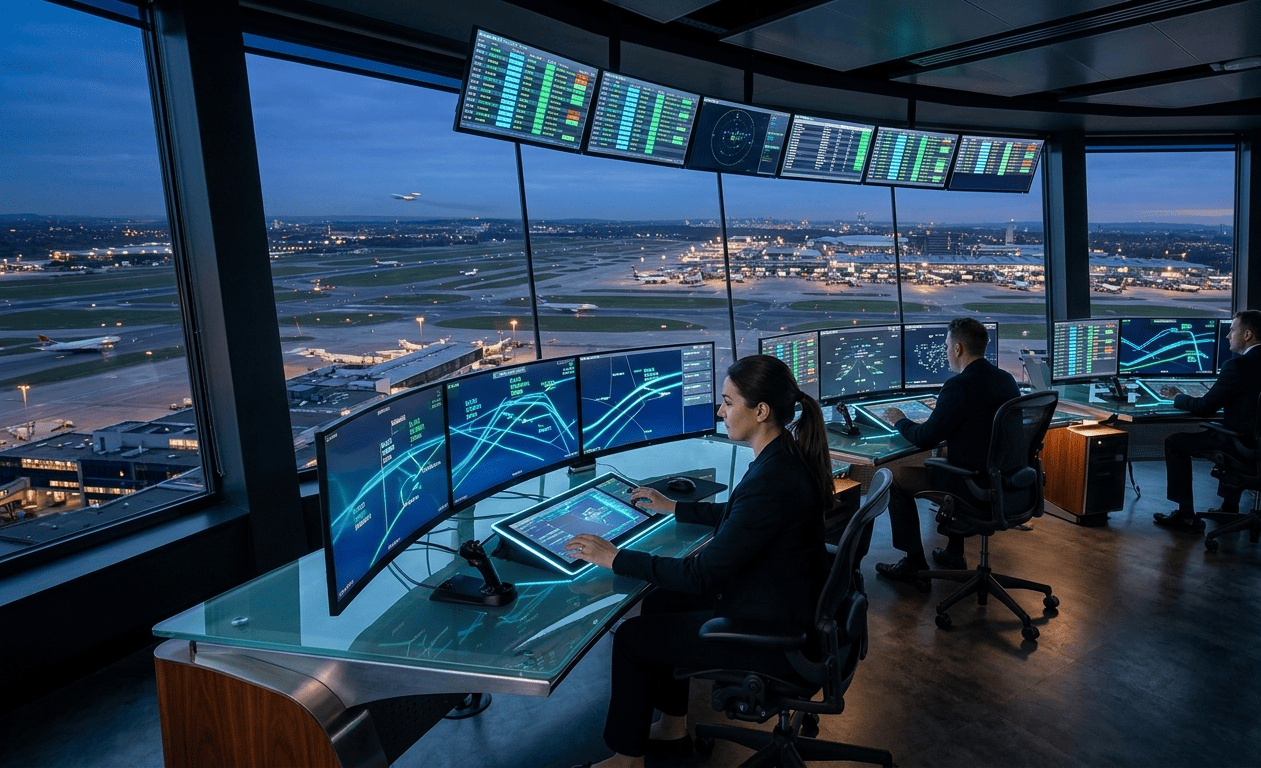
These systems act as digital twins—virtual, real-time replicas of the airport’s entire live ecosystem. By combining air traffic control variables, weather radar updates, baggage handling speeds, and runway taxi queues, the AI can simulate "what-if" scenarios. If a heavy fog bank is moving in, the platform predicts gate conflicts and taxi bottlenecks hours in advance. This allows air traffic controllers and airlines to collaborate on adjusting flight paths and spacing arrivals proactively, keeping the overall flow of traffic moving smoothly.
Seamless Passenger Self-Service Rebooking
Even with the best predictive models, severe weather and volatile operational environments will still occasionally cause disruptions. However, the way airlines handle the aftermath in 2026 has fundamentally evolved.
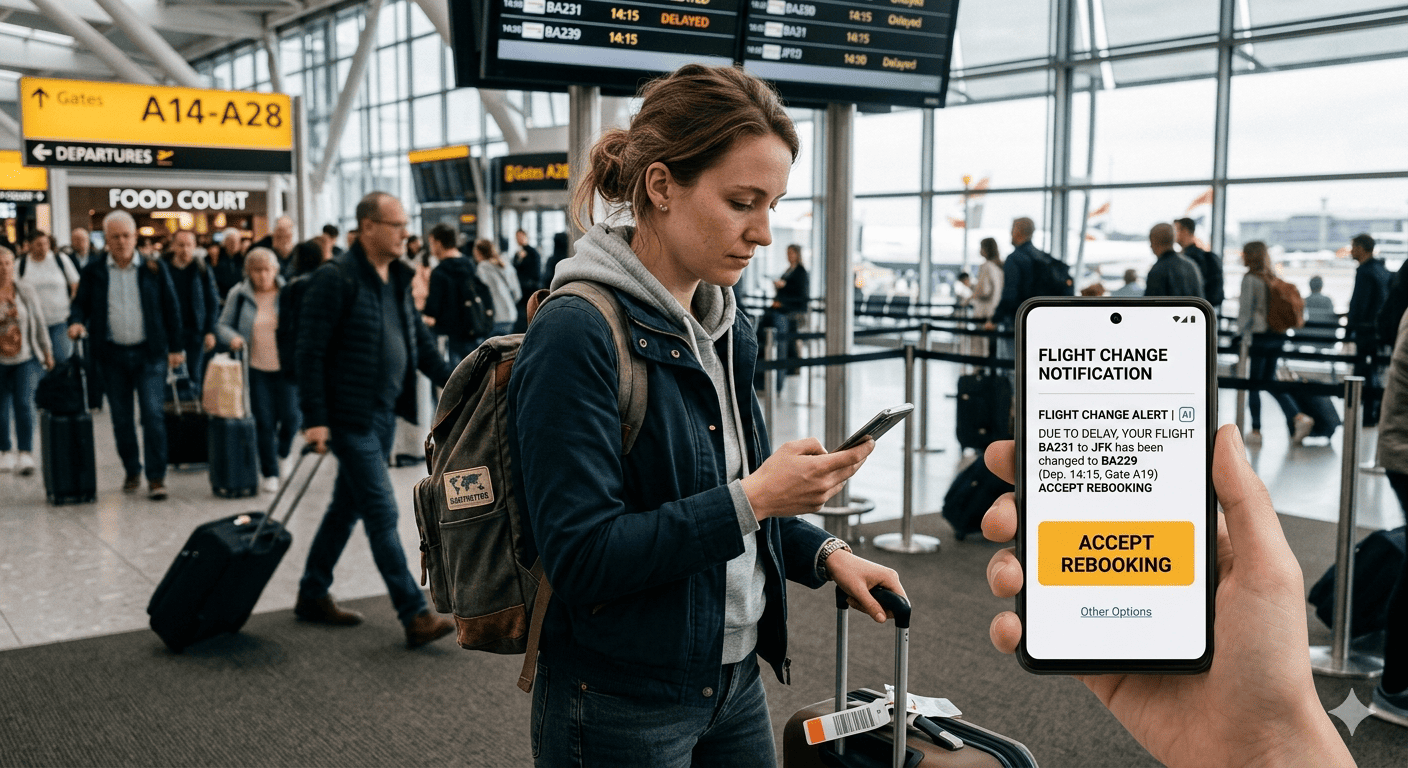
The era of standing in a mile-long physical line at a terminal customer service desk is drawing to a close. Modern AI agents are now embedded directly into airline consumer mobile apps. When a flight is heavily delayed or canceled, the AI immediately goes to work behind the scenes. It evaluates alternative routes, automatically holds a seat on the next available flight, and pushes a tailored notification straight to the traveler's phone.
With a single tap, passengers can accept the new route, generate a digital hotel accommodation voucher, or request a refund voucher. By managing passenger re-accommodation instantly via automation, airlines keep airport terminals clear, prevent call centers from becoming overwhelmed, and give travelers back a sense of control over their itineraries.